

The best international first class seat isn't necessarily the one with the grandest suite. It may be the one you bought after its fare fell. Passport Premiere says fewer than 15% of premium-cabin seats sell at their initial asking price, and a badly aligned fare bucket can put business class below coach: on two Iberia Madrid–Athens flights, business class cost $471 versus $575 for economy on one, and $373 versus $480 on another, as One Mile at a Time's fare comparison shows.
The trick is finding those prices before the inventory disappears, then checking whether the ticket's rules and route suit your trip. Below are seven practical tools and strategies, from fare intelligence and alerts to advisors and booking platforms. Each fits a different kind of traveler, and each has a trade-off. For long-haul comfort, the seat is only part of the calculation. Even practical tips for avoiding neck pain while traveling can help you make the most of the flight you book.
1. Passport Premiere
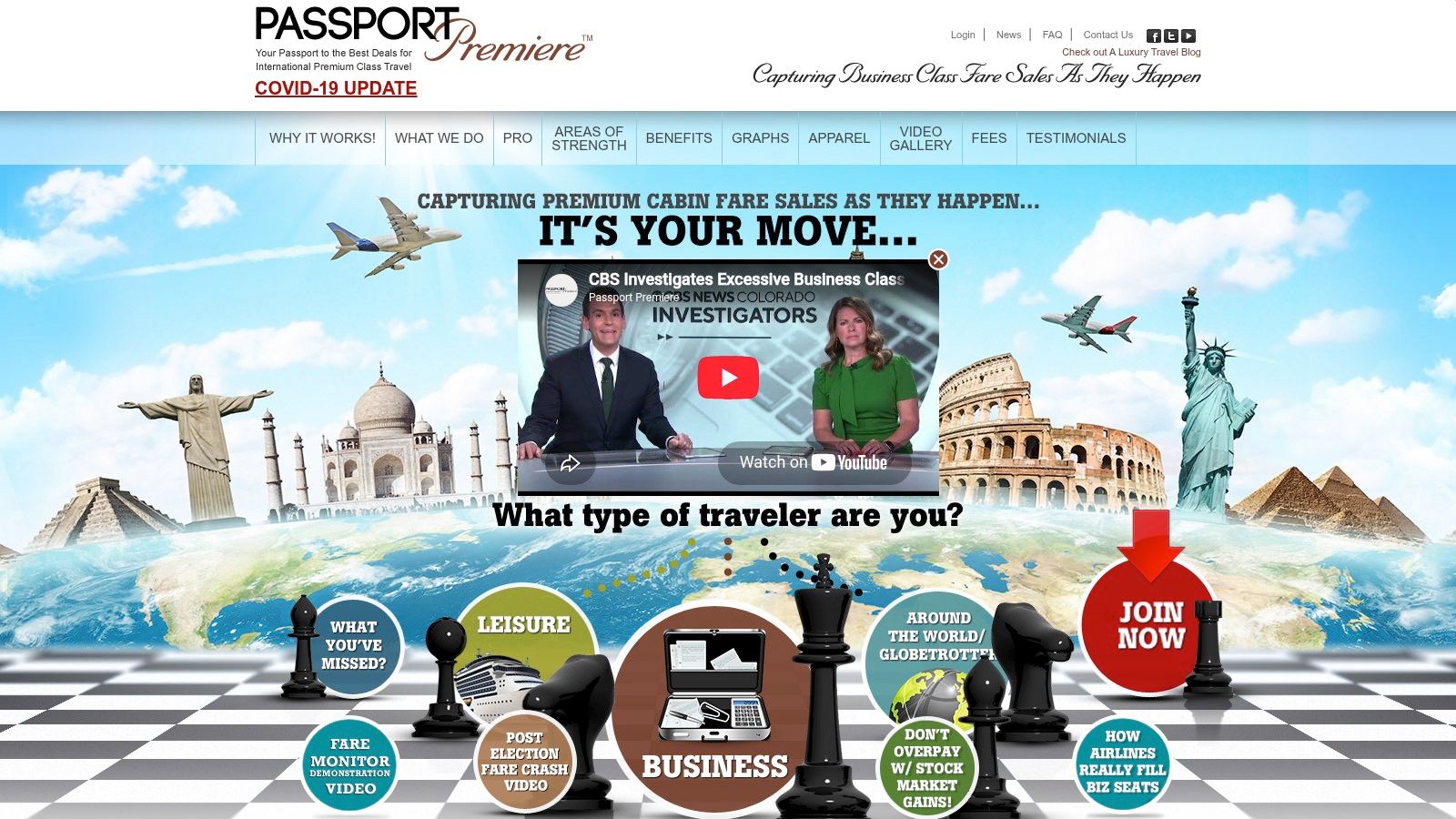
A premium fare is easier to judge when you can compare it with more than the price currently on screen. Passport Premiere is a membership-based airfare intelligence service focused on international business and first class. It combines fare monitoring with market analysis and guidance on fare cycles, helping members assess whether a fare looks competitive or may have room to fall.
That makes it a different tool from a simple deal email. Rather than only reacting to a fare alert, members can use its Fare Monitor demonstration, video gallery, news, and fare information to understand how premium prices move. The service is designed for frequent international business travelers, corporate travel managers, luxury leisure travelers, and travel advisors who want more context before committing.
Best use: Make the membership part of a regular fare-checking routine, not a promise that a particular route will be cheap.
The trade-off is straightforward. Membership fees apply, and while the site publishes them, specific amounts aren't stated in the information available here. Savings aren't guaranteed, either. Route, timing, demand, and seat availability all matter, so a traveler taking occasional short-haul trips may not get the same value as someone who regularly buys international premium-cabin tickets.
For a useful baseline, compare the fare with recent pricing for the same route and cabin, then check what the ticket includes. Premium-cabin services such as lounge access and flat beds don't depend on the fare paid, according to the service. If you carry travel documents often, a passport wallet for everyday travel is a practical companion, but it won't replace fare analysis.
2. Traveluent
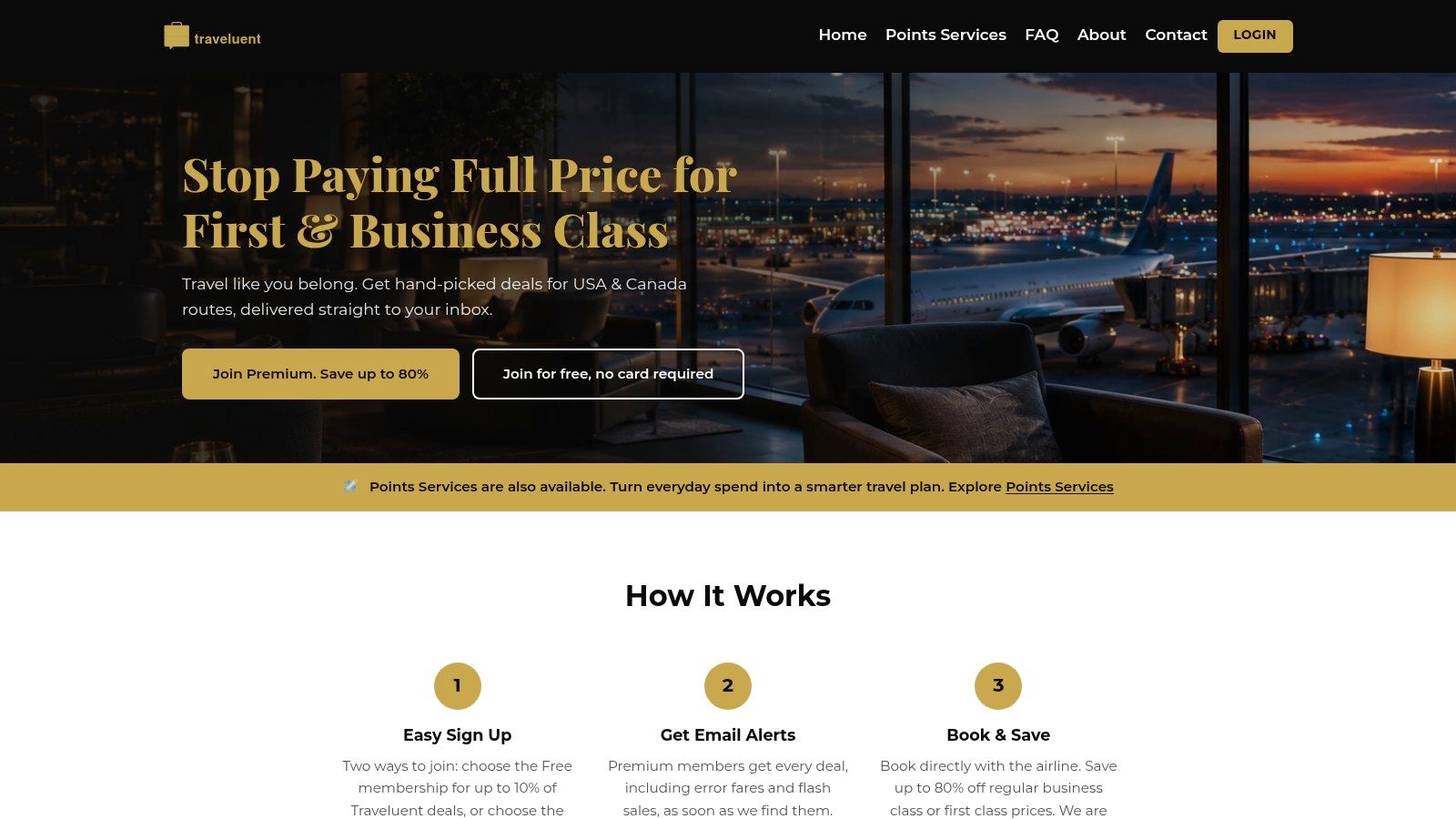
Traveluent sends curated alerts for discounted international business- and first-class cash fares departing from airports in the United States and Canada. The service says its deals are personally reviewed. Paid members receive qualifying alerts, early access, flash sales, occasional mistake fares, and the option to request monitoring for particular routes.
A free tier lets you try the service before paying. Premium membership costs $59 every three months or $149 per year, according to Traveluent's membership information. Route monitoring is most useful if you have a destination in mind and can shift your dates.
Mistake fares are a bonus, not a booking strategy. They can disappear quickly or be canceled. Going's guide to business-class flights describes rare international business-class fares as low as $300, against typical long-haul business-class round trips of roughly $3,000–$5,000. Treat those figures as examples of pricing errors, not fares to expect.
Choose this if: You have flexible dates, can act promptly, and are comfortable booking your own ticket.
Alerts do not guarantee a fare for your route or dates. Check availability, restrictions, and ticketing details before buying. If you prefer hands-on booking help, compare Traveluent with an advisor-assisted first-class travel option, such as OneSkies or Fly First Class International.
3. Good Flight
Good Flight's Trip Watch feature makes it the most trip-specific option in this list. Enter a destination, approximate travel dates, cabin, and optional target price, then receive an email when fares from selected departure airports meet the service's deal criteria. The alert includes a booking link, but you complete the purchase with the airline or ticketing provider.
The service monitors business and first class and checks fares daily from its selected airports. Airport coverage varies, so confirm yours is included before choosing a plan. Unlike a renewing membership, Good Flight sells one-time plans for an individual traveler, two travelers, or a household of up to six, with a 30-day money-back guarantee, according to Good Flight's plan details.
That structure suits a traveler who has a defined trip but doesn't want another subscription. It also limits what the tool can do: Good Flight doesn't book, rebook, or manage your flights, and an alert may be stale by the time you open it. Have your passenger details and payment method ready, then check the final fare and rules directly before buying.
A practical test: Set a target you'd genuinely pay, not an aspirational price that would make every alert irrelevant. If your dates are fixed, treat Trip Watch as a way to catch an opportunity, not as a substitute for confirming that a seat is still available.
4. OneSkies
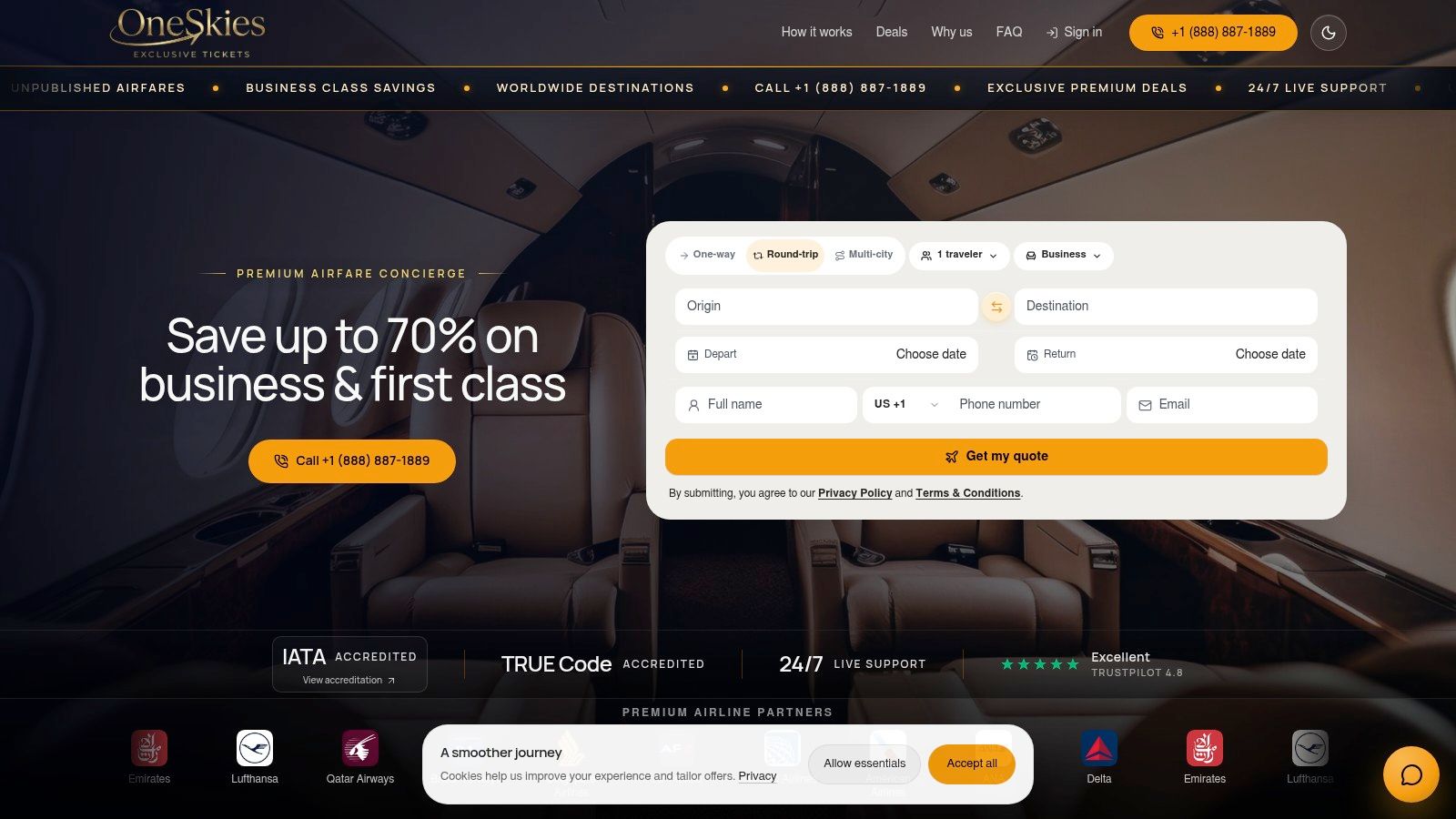
Some itineraries are awkward to compare through search results alone. OneSkies is a US-based premium-fare consolidator that offers advisor-assisted quotes for international business- and first-class trips. Submit your route and preferences, review the options an advisor finds, and decide whether to book. Requesting a quote is free, and the company advertises 24/7 human support and corporate accounts.
The useful distinction is between an advertised starting fare and a ticket you can buy for your dates. OneSkies says its published starting fares are estimates that include taxes and fees, but final pricing and fare rules depend on the itinerary and available inventory. Ask for the full terms before paying, especially if the trip involves connections, a tight schedule, or a change in plans.
The company identifies itself as IATA-accredited, but that doesn't mean every itinerary is the best value. Some airline or itinerary details may not be publicly disclosed, and advertised savings aren't guaranteed for a particular route. Compare the quote with a direct airline fare and make sure you understand the ticket's change and refund conditions.
Use an advisor when the itinerary is complicated, not just because the cabin sounds exclusive.
OneSkies is the better fit for travelers who want a person to help assemble options. If you prefer to track prices yourself before asking for a quote, use a premium airfare tracker as a separate part of your search.
5. Fly First Class International
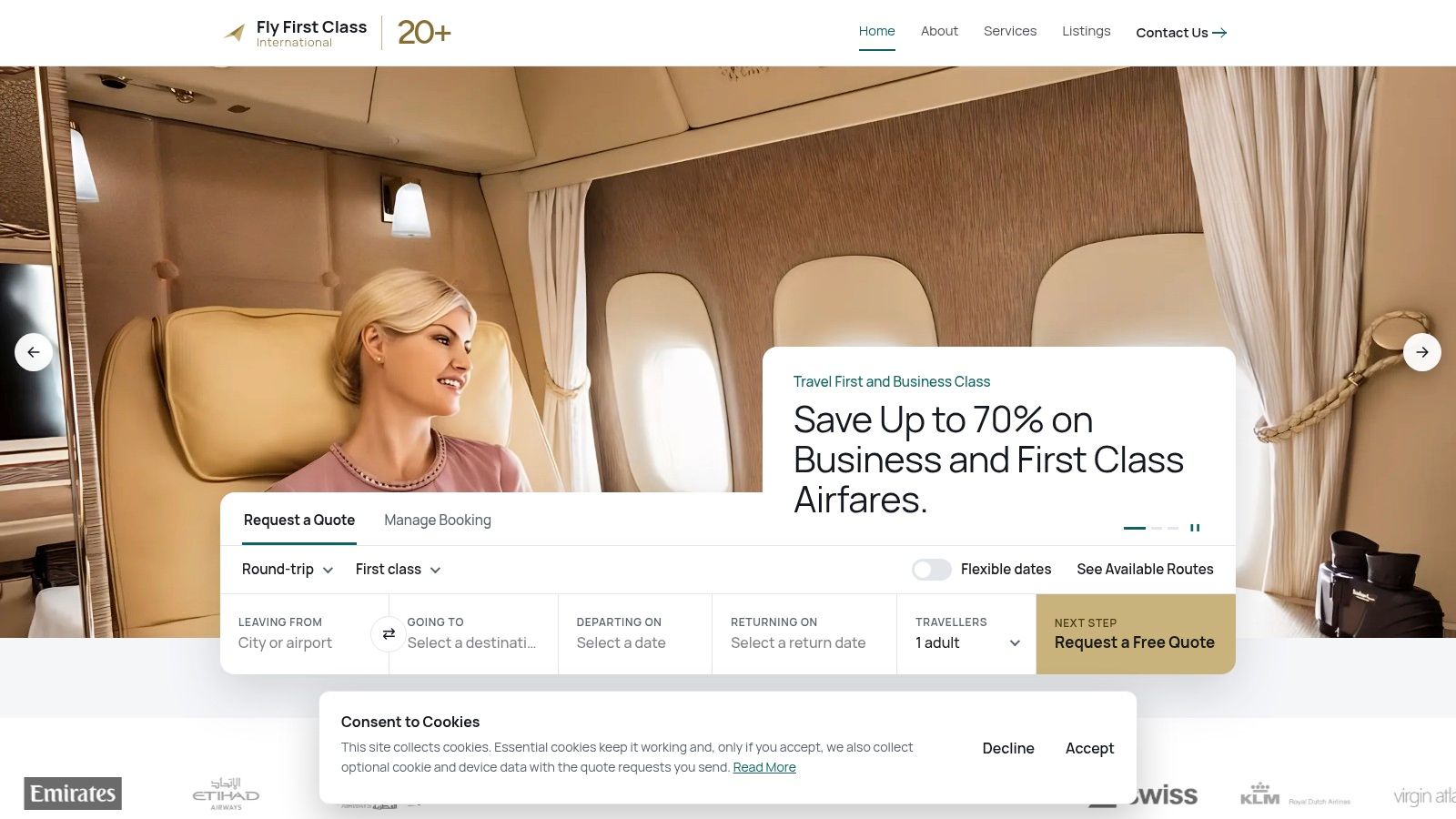
Fly First Class International is a specialist agency for long-haul international business- and first-class bookings. You request a quote, then an advisor presents available fares and explains the rules. The company says it has worked in this segment since 1998, and offers support for corporate travel, ticket changes, and upgrades through its international premium-cabin booking service.
This approach works best when you want a human to handle the details rather than chase alerts and ticket the flight yourself. The website includes sample fares for some routes, which can help you decide whether it's worth requesting a quote. The advisor can also explain how the ticket behaves if your schedule changes, a detail that matters more than a glossy cabin photo when a work trip is still in flux.
The drawbacks are the lack of a fixed public service price and the need to assess each quote on its own terms. Discount ceilings don't guarantee savings on your route. The company says tickets are nonrefundable, while changes depend on availability and the ticket rules, so read those conditions before purchase.
Before you approve a quote, confirm the operating airline, flight numbers, cabin on every leg, baggage allowance, and change fees. If your priority is choosing a particular seat or checking cabin availability, review the airline's seating options with an international first-class seat guide as part of your comparison.
6. Business-Class.com
Business-Class.com combines online premium-fare search with support from a sales team. It handles business- and first-class tickets for one-way, round-trip, multi-city, and open-jaw itineraries, and says a personal agent is assigned to bookings. Travelers can contact the service through 24/7 channels, and payment options include cards, bank transfer, and Affirm for eligible customers, according to Business-Class.com.
The broad itinerary support makes this platform worth considering when a simple return search doesn't fit the trip. Some route pages show sample prices, giving you a starting point for comparison. Still, a sample fare is not a ticketed quote. Prices can change before ticketing, and some partner or itinerary details may not be publicly identified.
Fare family matters, too. A low business-class fare may strip out benefits or flexibility that another fare includes. For example, a CNBC report on premium fare tiers listed United's Newark–London Heathrow basic Polaris round trip at $4,490, compared with $4,890 for standard and $5,390 for flexible refundable. The basic option excluded access to United's Polaris lounge.
Read the conditions before choosing the cheapest result. Business-Class.com notes that fares may be nonrefundable and nontransferable. Agent support can help you through the booking, but it doesn't remove the need to verify exactly what you're buying.
7. Basis
Basis offers an online way to search and book business- and first-class fares, with concierge support when a trip needs more attention. You can search and book one-way and round-trip itineraries without creating an account. For multi-city trips, you'll need to contact the team rather than complete the whole booking online.
That division is convenient for straightforward trips. Search first, then reach out if your routing needs a custom arrangement or if you have questions about the fare. Basis says payment is charged after the ticket is issued and confirmed, a useful point to understand before you enter the booking process. The company's booking FAQ also explains that fares can't currently be held before booking.
There's no fixed membership fee listed; the traveler pays for the selected itinerary. That makes Basis a tool for a specific purchase, not an ongoing alert service. Before you submit payment, confirm the exact flights, cabin, ticket rules, and whether the itinerary is refundable or changeable. If you need a multi-city route, contact the team early enough to compare the proposed fare with other options.
Basis works best for travelers who want a relatively direct online booking path but still value access to human support. It's less suited to someone who needs a fare held while coordinating a group or waiting for internal approval.
Best International First Class Fare Services at a Glance
| Service | How It Works | Pricing Model | Best For |
|---|---|---|---|
| Passport Premiere | Monitors premium fares and shares fare-cycle insights and alerts. | Paid membership; specific fees not provided. | Travelers seeking international business- or first-class fare insights. |
| Traveluent | Sends email alerts for discounted premium-cabin cash fares; members book themselves. | Free tier; Premium is $59 every three months or $149 per year. | Flexible travelers ready to book quickly without using points. |
| Good Flight | Checks selected airports daily and sends fare alerts or trip-specific watches with booking links. | One-time plans; exact prices not provided. | Travelers targeting specific routes, dates, or prices. |
| OneSkies | Advisors find premium-cabin options and provide trip-specific quotes. | Free quote requests; fare prices depend on itinerary. | Travelers who want human help with premium or complex itineraries. |
| Fly First Class International | Advisors provide quotes, explain fare rules, and can manage booking and support. | No fixed public service price; fares are quoted. | Travelers seeking hands-on help with international premium-cabin bookings. |
| Business-Class.com | Search or book premium fares online, with personal-agent support available. | Fare-based pricing; quoted prices may change before ticketing. | Travelers wanting booking assistance and varied itinerary options. |
| Basis | Search and book premium fares online, with concierge support for questions and custom trips. | Pay for the selected itinerary; no fixed membership price listed. | Travelers who want online booking with access to human support. |
Pick Your Tool, Then Wait for the Fare to Move
Choose a tool based on how you buy, not how impressive its marketing sounds. Passport Premiere fits regular international premium travelers who want timing guidance and fare analysis. Traveluent and Good Flight suit flexible, self-booking flyers who can act when an alert arrives. OneSkies, Fly First Class International, Business-Class.com, and Basis are better for complex itineraries or travelers who'd rather have an advisor or booking platform handle more of the process.
Then apply the same discipline no matter which service you use. Watch fare cycles before buying, compare the current price with its recent low, and check the rules attached to the fare. A first-class label alone doesn't tell you whether the ticket is a good deal, and a cheap business-class fare can be a poor fit if its restrictions clash with your plans.
For a route to Italy, Passport Premiere's Fare Monitor system found business-class fares 50% below a customer's initial searches. The system also lets a customer hold a fare while it monitors for a lower one, preserving the held fare. One member reported flying Melbourne–New York in a business seat for the price of economy. These examples show why monitoring and comparison can matter, but they aren't guarantees for your trip.
For corporate buyers, that same process helps separate a genuine travel need from a premium fare that's expensive. For leisure travelers, it creates room to choose a better departure or cabin without paying the first price presented. If the fare doesn't justify the upgrade, take business class, premium economy, or a mixed-cabin itinerary instead. The best international first class is the one that earns its place in your budget.
Choose one service, define your route and cabin, and let the fare come to you.
Passport Premiere combines international premium-fare monitoring, market analysis, and fare-cycle guidance to help travelers assess prices before booking. If you want a more informed way to pursue business and first class for less, visit Passport Premiere and see whether its membership fits the routes you fly.
