
Business class can be cheaper than coach, and a 2013 example showed a Delta coach fare at $3,256 plus 50,000 miles to upgrade, while discount business class cost $3,347. An open ended ticket leaves the return date, or sometimes the flight itself, unconfirmed at purchase, then requires validation later, usually after the carrier re-quotes the fare.
The popular advice is to buy an open ticket whenever your plans are uncertain. I push back on that. The old product can look flexible while shifting the most important price decision to the worst possible moment, when seats are scarce and the airline controls the re-quote. Today, flexible fare rules, fare alerts, and even premium-cabin pricing anomalies often provide a cleaner form of uncertainty management.
What an Open Ended Ticket Means
An open ended ticket leaves at least one travel detail undecided when the airline issues the ticket. The common version confirms the outbound flight while leaving the return date open. Other versions leave the flight number, travel date, routing, or reservation status unconfirmed until the traveler sets the itinerary.
Airline contract language still recognizes this format. One definition describes an open ticket as a ticket with no specified flight number or date and no reservation held at issuance. Another permits the carrier, flight number, date, or reservation status to remain open until confirmation before carriage. These definitions appear in the airline ticketing and open-ticket guidance and documented airline-condition examples summarized through ticket backlog and ticket-status analysis.
The two versions travelers confuse
The first is outbound-fixed and return-open. You purchase a confirmed trip to the destination, while the return coupon carries no final date or flight. Later, you contact the airline or issuing agent, request a date, and ask the carrier to confirm the open segment against available inventory.
The second is fully open from origin. The journey remains largely undefined from the start. It follows the older open-coupon concept and rarely suits ordinary retail travelers.
Payment at issuance does not reserve a specific future seat. When you confirm the itinerary, the carrier checks current fares and remaining inventory. If the selected flight costs more, you usually pay the difference. The open-ended flight ticket overview describes this structure and explains why an open return is generally priced above a fixed-date round trip. The higher price reflects the schedule and inventory uncertainty the airline carries.
That flexibility also has a modern counterpart. Flexible fare rules let you preserve change options while selecting a real itinerary, and real-time fare anomalies can make a flexible business-class fare more practical than an open coupon. The old logic survives, but it now sits inside fare conditions and timely buying decisions.
What you must verify before purchase
Ask for these terms in writing:
- Validity period: Confirm the final date for using the open coupon.
- Fare basis: Check restrictions on routing, seasonality, transfers, and booking class.
- Confirmation process: Establish whether you must call the airline, contact an agent, or use a specified ticketing channel.
- Price exposure: Ask whether confirmation triggers only a fare difference or also change and service fees.
An open ticket is a deferred booking with rules attached, not a blank check for travel. Treat the later confirmation as a separate pricing event, because that is where an apparently flexible itinerary can become expensive.
How Open Tickets Became a Legacy Product
Open tickets belonged to an airline market built around filed tariffs and agent-managed reservations. Before U.S. airline deregulation in the late 1970s, fewer travelers flew regularly, fares followed a more structured tariff system, and return dates often remained undecided. An agent could issue an open coupon while the passenger worked out the timing later.
That system became harder to sustain as deregulation changed airline pricing. The history of open-ticket development before and after deregulation links the decline of routine open tickets with the late-1970s shift and the industry's later adoption of computerized revenue management.
The commercial logic changed with precise fare classes and inventory controls. A seat was tied to a booking class governed by advance-purchase rules, seasonality, routing conditions, and demand forecasts. An undecided return date made it difficult to determine which fare applied and how much inventory the airline should protect.

Why computerization changed the workflow
Computerized revenue management pushed airlines toward confirmed segments, specific flight numbers, and explicit coupon statuses. Fare validators needed concrete itinerary data to apply restrictions. International carriers retained open-ticket language longer through tariff and interline arrangements, but electronic ticketing and modern reservation controls reduced the need for an open coupon.
The history of advance purchase excursion fares also helps explain the shift. Airline flexibility once sat inside the ticket document. Today, it usually sits in a fare family, exchange rule, refund condition, or controlled open segment.
Real-time pricing has not erased the old flexibility logic. It has relocated it. A flexible fare can preserve change rights while a confirmed itinerary protects available inventory, and a well-timed business-class buying event can sometimes outperform an expensive open coupon.
Open tickets still appear in some corporate, tariff, group, and international contexts. They have moved out of mainstream booking because airlines can offer useful flexibility while retaining control over future inventory. Treat the open coupon as a legacy tool, not the default solution.
How Airlines Handle Open Elements at Confirmation
Confirmation is where an open ticket stops feeling flexible and starts behaving like a negotiation with the airline's current inventory. The carrier retrieves the open coupon, checks whether it remains valid, and searches the requested date and routing under the applicable fare rules.
The airline generally doesn't treat your original payment as a guarantee of today's seat. It compares the original ticket value with the fare available for the itinerary you now want. If the new fare is higher, you pay the difference. Depending on the fare and carrier, a change fee or service charge may also apply. The carrier's open-ticket terms can permit a fare difference when the open elements are confirmed, which is why the original purchase price shouldn't be treated as the final trip cost.
The confirmation sequence
A typical process looks like this:
- The carrier retrieves the coupon. Staff locate the unused open segment and review its status.
- The validity window is checked. An expired coupon can't be rescued by choosing a date after the deadline.
- The requested itinerary is priced. The airline checks the current fare, routing, and available booking class.
- The ticket is reissued or updated. The record must preserve the original ticket history and applicable fare construction.
- You pay any required difference. The final amount depends on the current itinerary, not on the price you paid earlier.
The reissue is constrained by the original fare's conditions. The new journey may need to preserve the applicable routing, transfer count, seasonality, and other tariff requirements. A request that changes the origin, destination, or permitted path can fall outside the original rules and trigger a more substantial re-price.
Practical rule: Never buy an open segment until the issuing agent tells you exactly how the airline will calculate the later fare.
Where travelers get stuck
A sold-out return in the original booking class can cause a request to fail even when the aircraft still has seats. The available seat may belong to a different fare class, and the carrier may require you to pay up to that level or choose another flight.
Airport walk-up confirmation is also a poor strategy. Staff may have fewer options, and last-minute demand can make the available fare unattractive. Phone rebooking can add a service charge, while an agency or global distribution system queue may reject the request when the coupon, fare basis, or booking class doesn't align with the new itinerary.
Three conditions routinely defeat confirmation:
- Expired coupon: The ticket's validity period has ended.
- Changed routing: The requested path no longer complies with the original tariff.
- Blackout or restricted date: The return falls outside the fare's permitted travel conditions.
A lower current fare doesn't necessarily produce a useful refund. Many open-ticket arrangements focus on collecting additional money when the new fare is higher, while the rules may not provide a matching refund if the replacement itinerary prices lower. That asymmetry is the central risk.
Open Ended Ticket vs Flexible Fare vs Fare Alert
These three strategies solve different problems. An open ended ticket defers the date decision but leaves the later price exposed. A flexible fare fixes more of the economics at purchase. A fare alert avoids buying until the market reaches a price you consider acceptable.
A modern e-ticket guide is useful for separating the electronic record from the fare conditions. An electronic ticket can still be restrictive, refundable, or changeable. The format isn't the flexibility. The fare rules are.
| Criteria | Open Ended Ticket | Flexible Fare | Fare Alert Strategy |
|---|---|---|---|
| Cost certainty | Low. The open segment may be re-priced at confirmation. | Higher. The purchase price and change conditions are clearer from the start. | Low before booking, then high once you buy the selected fare. |
| Change fees | Fare differences and possible service fees can apply. | The rules may allow changes without a fee or with a stated charge. | Depends on the fare selected after the alert. |
| Refund eligibility | Depends on the original fare and ticket conditions. | Usually clearer, especially when the fare is explicitly refundable. | Depends entirely on the ticket purchased. |
| Ideal traveler | Someone with a legitimate need for an open coupon and access to knowledgeable ticket support. | A traveler who expects changes but wants price and rule clarity. | A traveler who can wait and has a target price. |
| Risk level | High. Confirmation depends on future space and fare availability. | Moderate to low, provided the rules match the trip. | Moderate. Waiting can help, but the desired fare may not appear. |
| Where it wins | When the exact return date genuinely cannot be selected and the fare construction remains suitable. | When flexibility matters more than the lowest initial quote. | When departure timing is flexible and the traveler can monitor the route. |
| Where it fails | When the traveler assumes the original payment guarantees a future seat. | When the traveler pays for flexibility they won't use. | When the traveler has a hard deadline and can't wait. |
My recommendation
For most trips, choose the flexible fare first. It gives you an explicit change window and a defined pricing framework, rather than asking you to trust that the future confirmation will remain affordable.
Choose an open ticket only when the airline or agent can document the coupon validity, confirmation procedure, applicable fare basis, and likely re-quote method. If those details are vague, walk away.
Use a fare alert when you can wait and the route has meaningful price movement. That approach treats flexibility as a purchase tactic instead of paying in advance for an uncertain future segment. It works especially well when your dates can move and you can act quickly after a suitable fare appears.
The common mistake is comparing only the initial prices. Compare the total exposure, including a future fare difference, service fee, unused-ticket risk, and the cost of losing the preferred travel date.
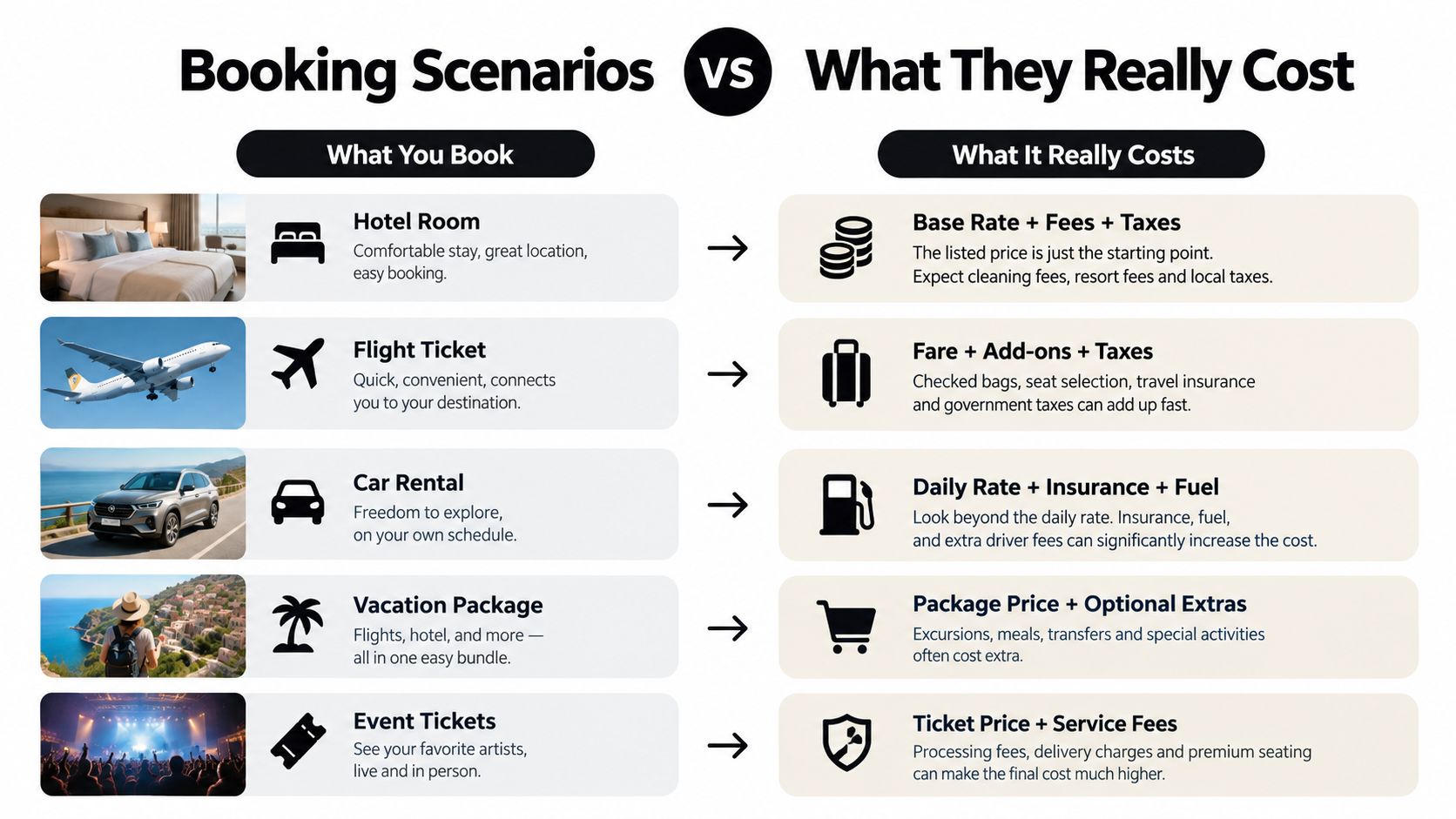
Booking Scenarios and What They Really Cost
Consider a New York to London trip. The outbound is fixed for next month, but a client meeting may move the return. An open return appears attractive because it preserves the outbound while postponing the decision.
The problem arrives when the meeting date becomes clear. The airline searches the requested return under current inventory. If the original booking class has disappeared, you either pay the fare difference and any applicable fee or accept an inconvenient flight. A fully refundable fare may cost more at purchase, but it puts the traveler in a stronger position because the change and refund conditions are known before departure.
Actual dollar figure: The verified data doesn't provide a New York to London quote, so there is no honest final amount to invent. The open ticket's final cost is the original fare plus any quoted difference and applicable fees. The lesson is direct: for a client-driven schedule, buy a flexible or refundable fare unless the open-ticket pricing formula is written clearly.
A multi-city Europe trip
A leisure traveler may want to fly into one European city and leave from another, without committing to the return city. A single open-ended coupon usually doesn't solve that problem. It tends to preserve a defined origin-destination relationship, so the traveler can still face a re-price when the actual return city changes.
Two separate one-way tickets or a properly constructed multi-city itinerary usually fits the objective better. Before buying, use a practical guide on how to plan a multi destination trip to map the route, surface transport connections, and identify which city should anchor the return.
Actual dollar figure: No verified fare quote exists for this Europe itinerary, so a precise comparison would be fabricated. The open coupon may look simpler, but it loses when the traveler's real need is an open-jaw route rather than an undecided date.
Waiting for a premium fare alert
A frequent flyer monitors a route where business class normally runs $4,200. A fare alert reveals a $2,900 mistake fare. The gross difference is $1,300, calculated from the verified figures, before considering taxes, restrictions, or the risk that the fare is withdrawn.
That strategy wins if the traveler can commit when the alert appears and the fare rules work. It also illustrates why an open ticket isn't the only way to manage uncertainty. Waiting for a favorable premium-cabin event can produce a better outcome than buying an open economy structure and hoping the later confirmation remains cheap.
For travelers comparing change policies and premium booking options, review flex flight tickets before assuming that an open coupon is the only flexible route.
Why Business Class Can Sometimes Beat Coach
The assumption that premium cabins always cost more is wrong. Airlines price inventory by fare class and demand, not by a permanent ladder where economy must sit below business class on every search.
The Points Guy has reported examples involving Alaska, American, Delta, and United where extra-legroom economy, premium economy, and first or business class priced below economy on award bookings, as summarized in documented business-class fare examples. That behavior shows that cabin hierarchy doesn't always determine price hierarchy.
A cash example makes the point. A 2013 Delta example showed an upgradeable coach fare at $3,256 plus 50,000 miles, while a discount business-class fare cost $3,347 in the same cabin family, according to the business-class pricing comparison. The difference was small enough to challenge the instinct to buy coach and upgrade later.
Rail pricing can behave similarly. An Amtrak forum example cited coach at about $110 while business class was $89, as recorded in this business-class cost comparison. The reason isn't generosity. Demand-based fare rules can leave a higher service tier with a lower displayed price.
The connection to open-ticket thinking
Open-ended travel is about managing uncertainty. The modern version doesn't always require an open coupon. A flexible premium fare, a targeted alert, or a temporary pricing anomaly can preserve better value while giving you a more usable ticket.
A 2025 report found a Washington, DC to Austin search where the first 9 options had first class only $100 more than coach, illustrating how dynamic pricing can compress the gap between cabins in a live search, as detailed in the premium-cabin fare report. That doesn't mean business class will routinely beat coach. It means you should compare the actual fare display rather than applying a cabin-based assumption.
My advice is blunt. If business class is close to coach, check its change, refund, and routing rules before choosing the cheaper-looking economy option. The premium fare may offer a better combination of comfort and usable flexibility, while an open economy ticket may defer the expensive decision until later.
Picking the Right Approach for Your Trip
Match the product to the uncertainty you have. A business traveler with three meetings across two cities in three weeks needs a fare that can absorb schedule changes, not a vaguely explained open coupon that gets re-priced when the calendar becomes urgent.
A leisure traveler with a broad June to September window should use a fare alert and decide in advance what price and conditions justify booking. Once the target appears, book the fare that fits the trip instead of waiting indefinitely for an ideal open-ended product.
A relocating family faces a different problem. Dates may be fluid, but the group needs predictable costs, baggage rules, and seat availability. Compare an open ticket with a refundable fare and appropriate travel insurance. The later re-quote can erase the apparent savings from the open structure.
| Trip Type | Best Approach | Why It Wins | Watch Out For |
|---|---|---|---|
| Business schedule with moving meetings | Flexible or refundable fare | It defines the change and refund terms before the trip. | Premium flexibility can cost more upfront. |
| Long stay with a truly unknown return | Open return only when rules are documented | It preserves the outbound while leaving the return unresolved. | Future fare availability and the re-quote can undermine the value. |
| Leisure trip with movable dates | Fare alert strategy | You wait for a suitable market price instead of paying for open inventory. | The preferred fare may disappear before you act. |
| Multi-city or open-jaw journey | Separate one-ways or a constructed multi-city fare | It matches the route instead of forcing a fixed return pair. | Check baggage, connection, and separate-ticket protection. |
| Premium traveler seeking value | Compare business and coach directly | Cabin pricing can produce surprising gaps or inversions. | Never assume a low premium fare has flexible conditions. |
| Relocation with uncertain dates | Refundable fare plus insurance comparison | It provides clearer financial protection for a complex move. | Insurance exclusions and fare restrictions still matter. |
The simple decision rule is this: if only the return date is uncertain, compare a half-open structure with a flexible fare; if the route is uncertain, use separate or multi-city tickets; if the price is uncertain, monitor the market; if comfort matters, check business class before settling for coach.
An open ended ticket still has a place, but it's specialized. For most travelers, modern flexible fares and disciplined fare alerts offer clearer protection, better availability, and fewer confirmation surprises.
Passport Premiere offers fare monitoring and market analysis for travelers comparing international premium-cabin prices, including tools that help members hold a fare while monitoring for a lower one. Visit Passport Premiere to review how its fare intelligence can help you compare business-class opportunities against flexible coach and open-ticket alternatives before you book.
