
“Always book early” is too blunt a rule for business class discount fares. Business class cheaper than coach is a documented pricing outcome, not just an upgrade fantasy: a published Virgin Australia comparison showed Canberra–Melbourne economy at A$629 while business on the same departure cost A$449, according to Australian Frequent Flyer's same-flight examples.
When premium costs less than coach, don't automatically assume the airline has mispriced an empty cabin. Separate booking classes and fare restrictions can produce that result even without a mistake. Published comparisons include $575 in economy versus $471 in business, explained through fare construction and available booking inventory.
Think of these opportunities as Business Class Buying Events: periods when an available premium fare deserves comparison with coach, rather than its own previous asking price. Monitoring services, alerts, card programs, and consolidators offer different ways to find them. The following options can help identify opportunities, but none guarantees business below economy on your chosen trip.
1. Passport Premiere

Passport Premiere is the specialist monitoring option for travelers who want to understand international Business and First Class pricing before committing. Its membership combines fare monitoring, market analysis, and guidance on premium-cabin fare cycles, including fare drops and competitive fare wars.
That distinction matters because an airline's initial asking price isn't necessarily a useful benchmark. For a corporate travel manager, consultant, or frequent long-haul traveler, the more useful question is whether the available fare represents value for that route, departure period, and set of restrictions.
Monitoring the market, not just the ticket
Passport Premiere's resources include a Fare Monitor demonstration, video gallery, news, and educational material for business, leisure, and around-the-world travelers. These resources make its proposition broader than receiving an alert and immediately clicking through to book.
Its strongest use case is a traveler with recurring international premium-cabin needs who wants context around purchase timing. My assessment is that this approach is more relevant to evaluating a buying event than celebrating a reduction from an unusually high reference fare.
- Advantages: Specialized international premium-cabin monitoring, fare-cycle analysis, and educational resources can support both corporate purchasing and personal travel decisions.
- Limitations: Membership fees apply. Savings depend on route, dates, inventory, and timing, and there's no guaranteed below-coach outcome.
- Evidence boundary: Website testimonials describe leisure and corporate savings, but no quantified customer results or detailed savings calculations are available in the supplied material.
Buying-event test: Compare the available business fare with the coach ticket you would actually buy, not with an unrestricted economy fare that doesn't match your needs.
For travel advisors and small-business owners, the practical value is a more informed purchase decision. Before joining, review the published membership fees and demonstration, then decide whether your international travel frequency justifies ongoing intelligence rather than occasional deal discovery.
2. Traveluent
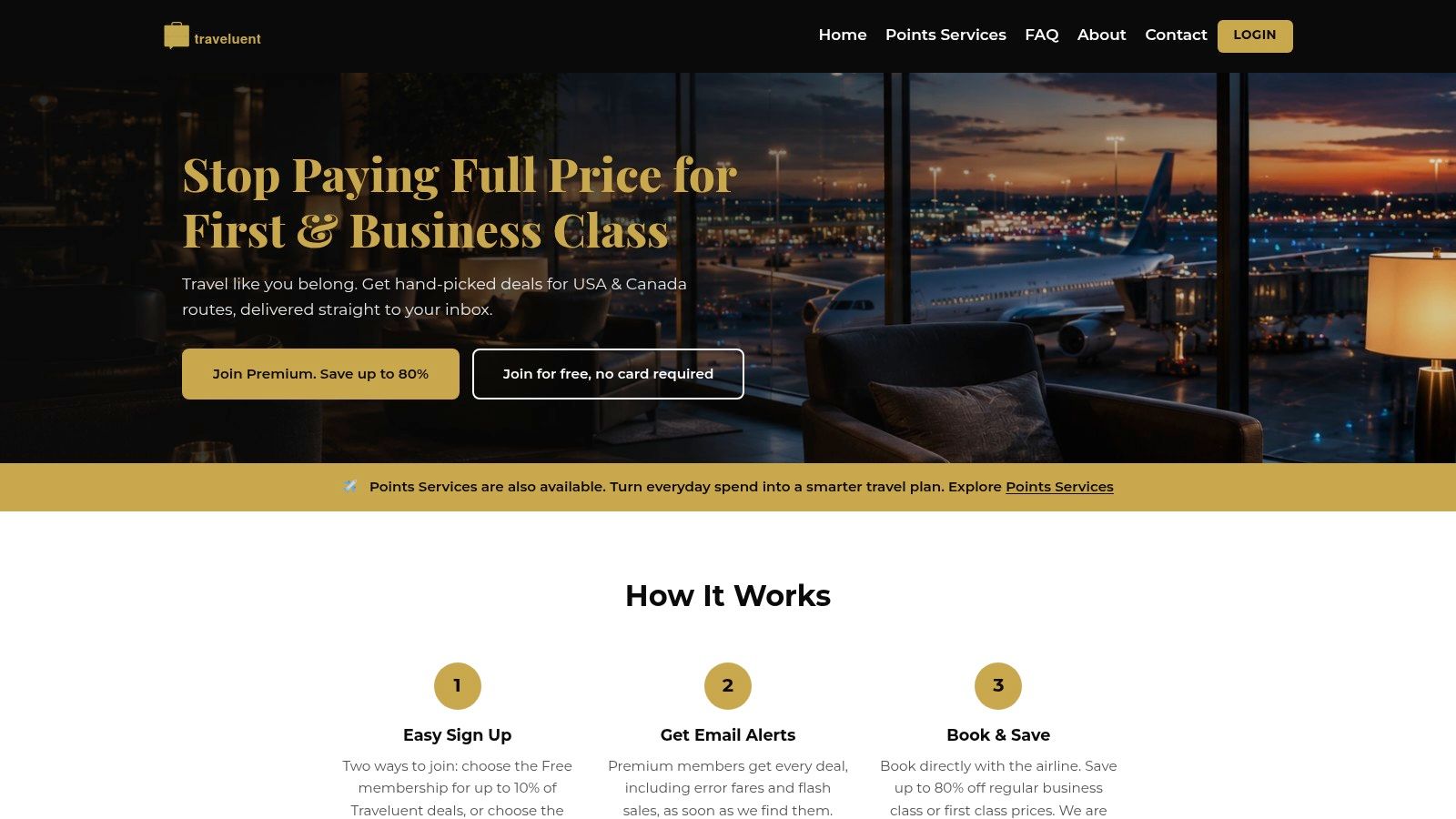
Traveluent suits travelers who want premium-cabin cash-fare alerts but prefer to book independently. It covers business- and first-class opportunities departing from U.S. and Canadian airports, including domestic and international itineraries.
The free tier provides a limited selection without requiring a card. Paid membership adds the full deal feed, flash-sale alerts, error-fare alerts, and custom-route requests; Traveluent lists Premium at $59 every three months or $149 annually.
Discovery without booking assistance
The important distinction is responsibility. Traveluent supplies fare details and booking guidance, but members arrange their own tickets, and the service doesn't provide post-booking support.
- Best fit: Travelers who can adjust dates, evaluate an alert promptly, and manage their own airline reservation.
- Useful feature: Custom-route requests let members express a preferred itinerary, although a request doesn't guarantee a qualifying deal.
- Main trade-off: You retain control over where you book, but you also handle ticketing decisions and subsequent changes.
For a potential below-coach event, price both cabins on the exact departure before acting. An attractive premium alert alone doesn't establish that business is cheaper than economy, particularly if the comparison involves different dates, connections, or refund conditions.
The practical complement is a purchase framework, such as Passport Premiere's guidance on how to get the best business-class fares. Use alerts to identify candidates, then assess whether the itinerary meets your schedule and flexibility requirements. Traveluent is less suitable if you need someone to own the booking process after discovery.
3. Going Elite

Going Elite makes more sense for a mixed-cabin traveler than a premium-only buyer. Its alerts span economy, premium economy, business, and first class, with cash fares and some points-and-miles opportunities from U.S. departure airports.
Going's Elite membership page lists $199 annually and advertises a 14-day trial for eligible new subscribers. Members follow deal instructions and book independently rather than purchasing tickets from Going.
Its Destination Watchlist lets travelers indicate preferred places. That's useful for someone who knows where they'd like to go but can move the trip to match an attractive fare.
A destination alert is an invitation to compare, not proof that your required departure has the same price.
Broader coverage, less specialization
Going publishes premium-cabin deal examples and membership information, which helps prospective members understand its offering. However, its broader cabin mix may be less focused than a dedicated international premium-fare service.
- Strength: One membership can support different purchasing decisions, from an economy work trip to a premium-cabin vacation.
- Constraint: Some deals may last only hours, and an alert doesn't guarantee availability for your exact dates or route.
- Buyer responsibility: Verify the final itinerary and fare conditions before treating a published example as bookable.
My assessment is that Going Elite is a discovery choice for flexible travelers, not a substitute for route-specific monitoring when a meeting fixes your schedule. For below-coach comparisons, ignore the advertised saving against a typical premium fare and check the economy price available at the same time.
4. Thrifty Traveler Premium
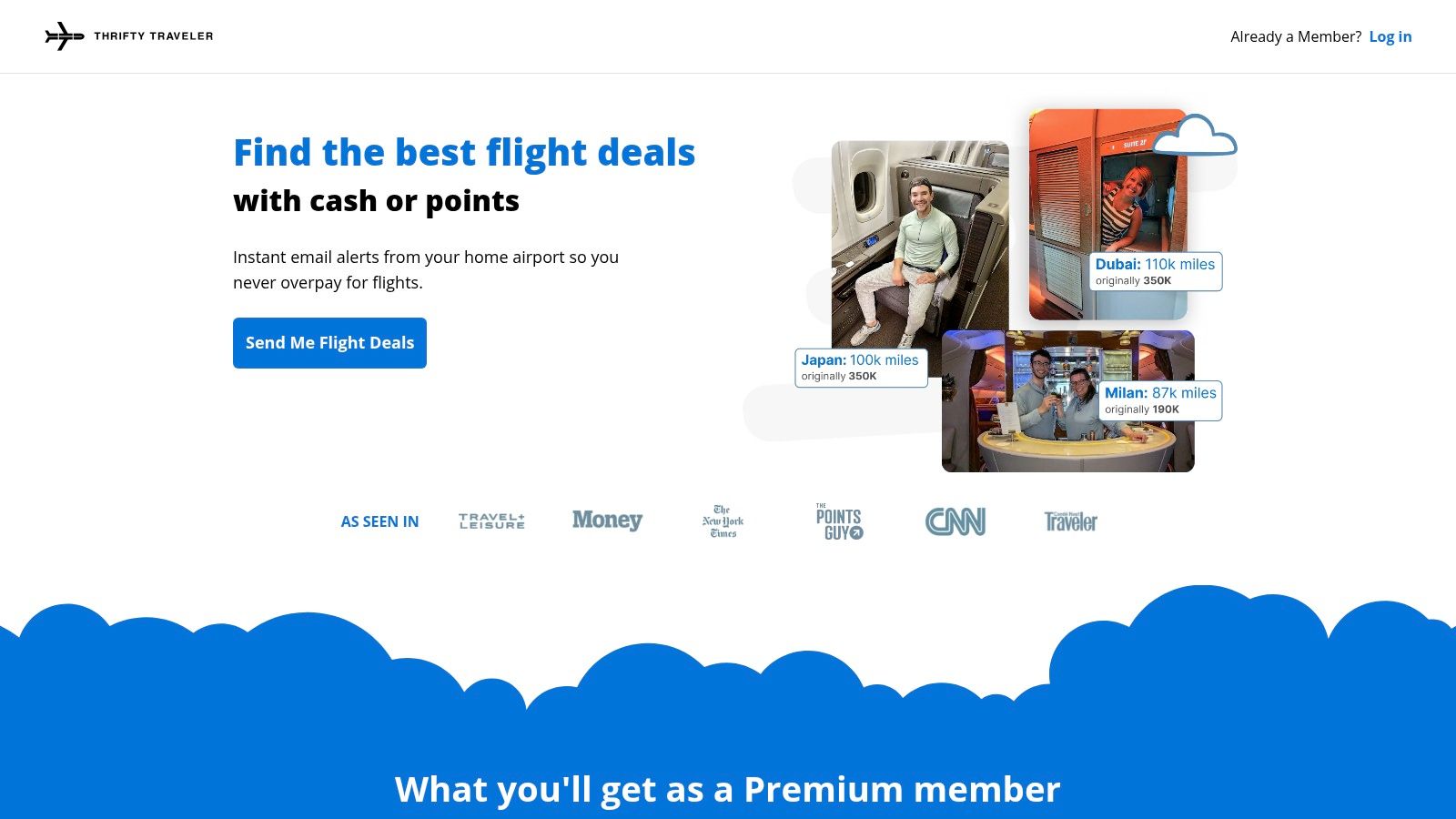
Cash fares and award seats require different comparisons. Thrifty Traveler Premium combines both, covering economy through first class and including opportunities that use airline miles or transferable credit-card points.
The service offers airport selection, deal filters, and optional text alerts for time-sensitive opportunities across many U.S. and Canadian departure airports. Thrifty Traveler lists membership at $129.99 annually, a 100-day money-back guarantee, and a subscription price-lock policy.
Keep cash and points comparisons separate
A business award that requires less cash than an economy ticket isn't automatically a business fare below coach. You're also spending points, so the decision should account for what you're giving up and whether the required award seats are available.
- Cash-fare advantage: Premium alerts can identify tickets worth comparing directly against coach on the same itinerary.
- Award advantage: Points-and-miles alerts provide another route to premium travel when you hold suitable balances.
- Limitation: Award inventory may be restricted, while fixed dates and destinations can require separate route-specific tracking.
Members book independently; Thrifty Traveler doesn't act as their travel agent. That makes it more appropriate for a traveler comfortable choosing a booking channel and managing the reservation afterward.
For buyers learning how to find business-class flight deals, the useful discipline is to maintain separate cash and award comparisons. Don't label a redemption cheaper than coach solely because its immediate cash payment is lower. Conversely, don't overlook a competitive cash fare because you've accumulated points for the trip.
5. American Express International Airline Program
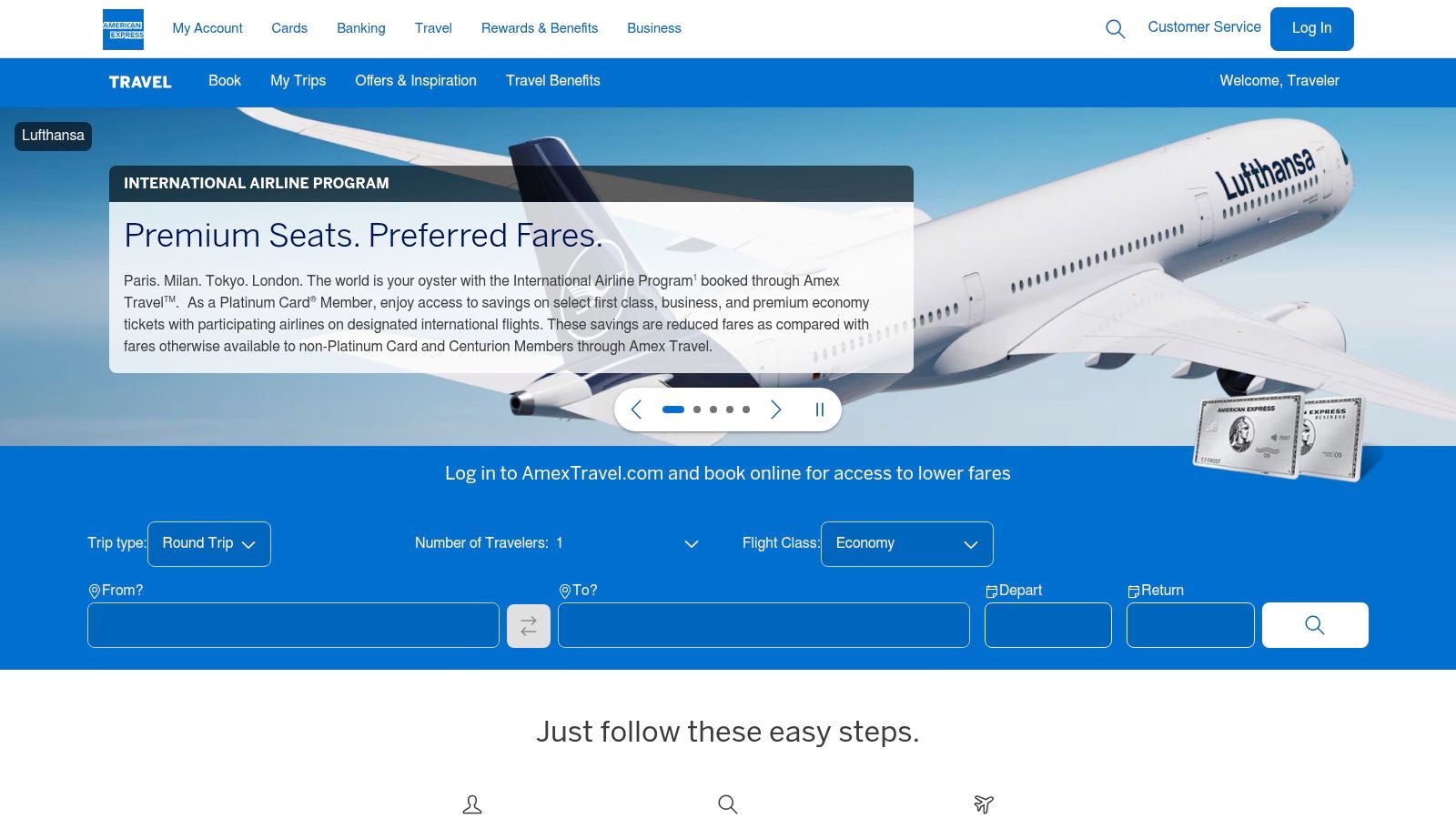
Unlike an alert subscription, the American Express International Airline Program is an eligible-cardmember booking option. It offers reduced fares on select international business-, first-, and premium-economy tickets through Amex Travel.
Eligibility is limited to qualifying Platinum and Centurion accounts, and availability depends on participating airlines, routes, dates, and seats. The traveling cardmember may include up to seven additional travelers, subject to the American Express premium-flight offer terms.
The program supports booking through Amex Travel or the card's service number. Eligible reservations may be paid partly or fully with Membership Rewards points, and eligible Platinum cardmembers may earn points on qualifying bookings, subject to program terms.
A comparison channel for existing cardmembers
The strongest case is an already-eligible traveler checking the same itinerary through another booking channel. There's no separate fare-alert subscription to add, but card eligibility remains a prerequisite.
- Advantage: Reduced premium fares and eligible points-payment options are available within the cardmember booking process.
- Restriction: Only selected inventory qualifies, and normal airline fare restrictions still apply.
- Price caveat: A program discount doesn't establish that Amex has the lowest available fare, or that business costs less than coach.
Compare matching flights, cabin segments, and cancellation terms elsewhere before purchasing. For a corporate traveler, a modestly higher flexible fare may be preferable to a lower restricted ticket if the meeting could move. The program is a useful booking benchmark, not evidence that every eligible premium fare represents a buying event.
6. AirConcierge
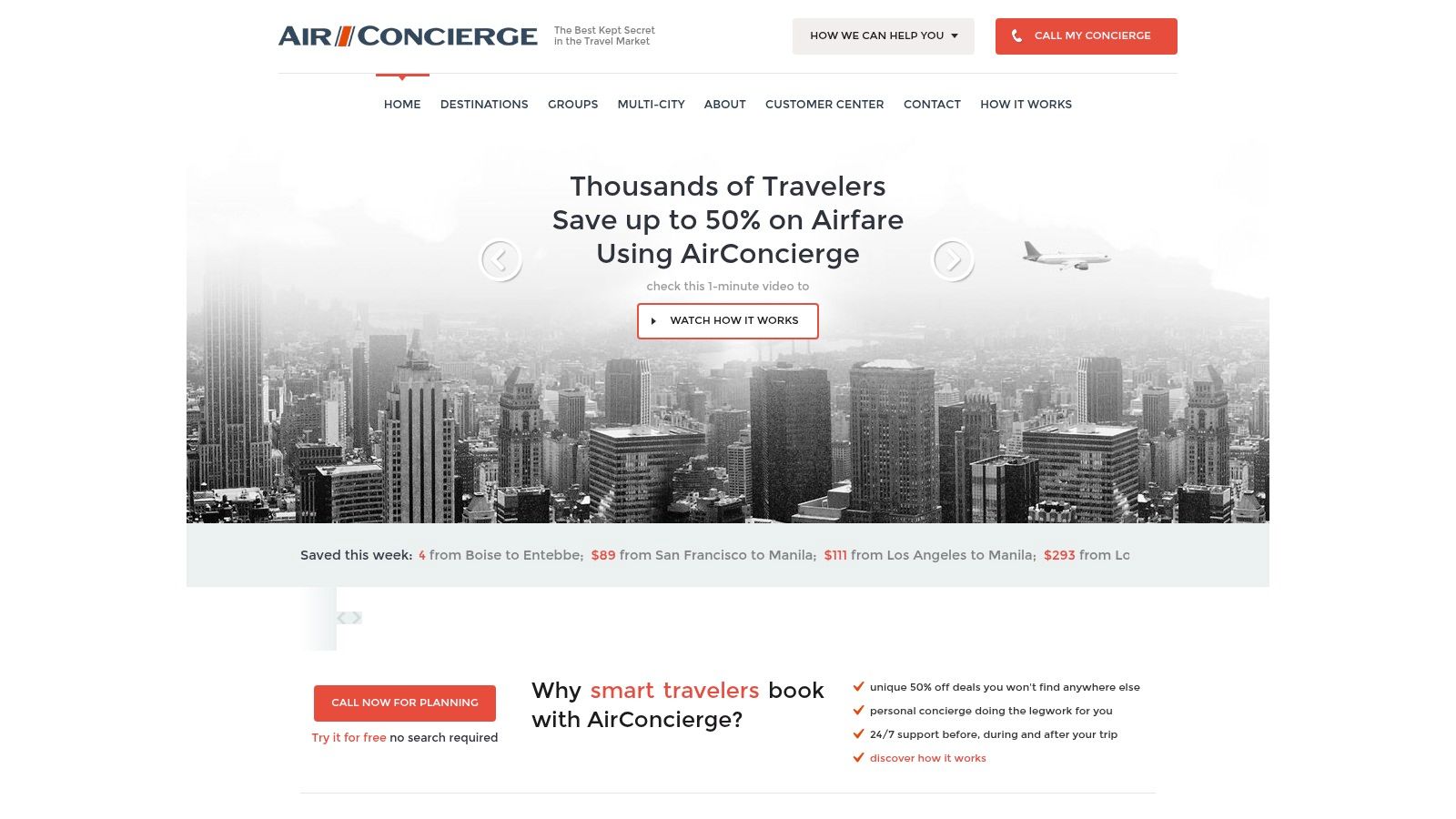
AirConcierge takes an agent-assisted approach rather than asking travelers to monitor a deal feed. Travelers request options, and the service searches for privately negotiated fares and advertises limited-time flash deals, including business- and first-class itineraries.
AirConcierge advertises discounts of up to 70%, but that's a marketing ceiling, not a guaranteed saving for your trip. No membership price is listed, and some exclusive offers reveal airline or flight details only after an itinerary request.
That changes how the offer should be evaluated. Until you have the carrier, routing, cabin, and rules, you don't have a comparable alternative to an airline's published fare.
Quote discipline: Ask for the complete itinerary and written fare conditions before deciding whether an agent's price beats a self-booked ticket.
Human assistance with terms to examine
AirConcierge may suit someone who doesn't want to conduct the search personally or who can consider alternative dates and routings. It provides a different purchasing path from self-service alert memberships, but assistance shouldn't be confused with unrestricted flexibility.
- Potential benefit: An agent can present options for a traveler willing to consider different itineraries.
- Exchange exposure: Published rules describe processing fees for certain exchanges when the underlying fare permits changes.
- Service boundary: Terms indicate that some travel-product issues may need to be resolved with the travel provider.
For a suspected below-coach opportunity, obtain the complete business quote and independently price the relevant economy alternative. Include processing charges and change conditions in the decision rather than comparing headline amounts alone.
7. OneSkies
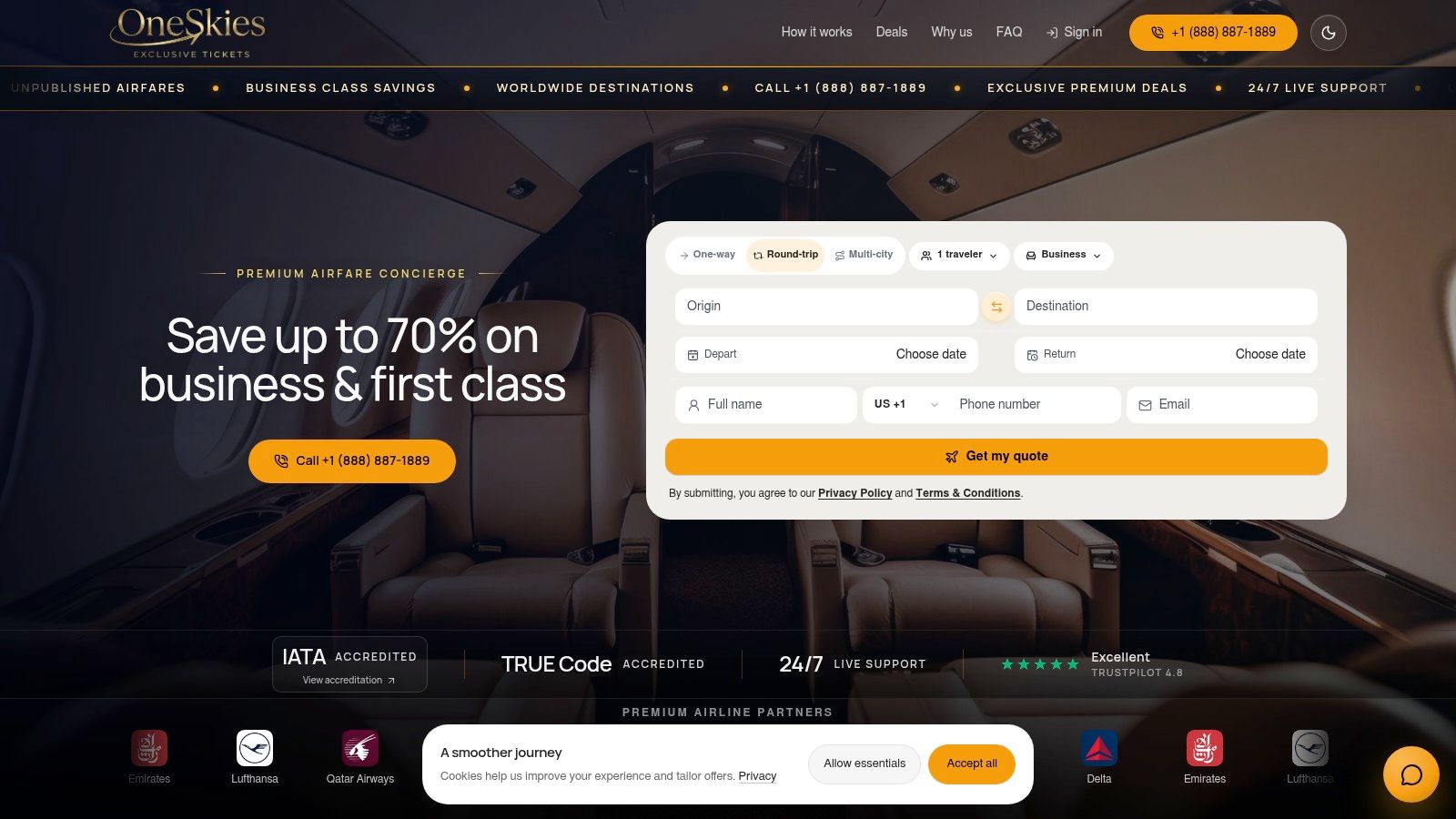
A multi-city itinerary calls for a different evaluation from an opportunistic destination alert. OneSkies describes itself as a U.S.-based consolidator offering quote-based assistance for international business- and first-class travel, including one-way, round-trip, and multi-city journeys.
Quote requests are free. OneSkies advertises 24/7 support and displays sample starting fares, but those examples aren't confirmed prices for a particular traveler's itinerary.
Final pricing depends on the airline, itinerary, availability, and fare rules. Some rates have limited seats, so the relevant evidence is the written quote you receive, not the lowest starting price on the website.
Evaluate the quote and the service commitment
Human-agent assistance may be useful when you want someone to assemble a more involved trip. The site also lists airline partners and provides a third-party review profile that prospective customers can consult.
- Best application: Requesting an executable premium-cabin itinerary rather than waiting for a general alert.
- Main limitation: You must submit a request to obtain a relevant fare, and displayed examples don't establish availability.
- Before payment: Confirm airline identity, cabin on every segment, change options, fare rules, and ticketing details in writing.
When comparing business-class fare deals, request the same dates and routing from each booking option. Otherwise, a cheaper quote may involve a different product.
My assessment is that OneSkies is worth evaluating for itinerary assistance, while a monitoring service serves a separate purpose: judging whether the quoted price is attractive enough to buy now.
Business Class Discount Fare Comparison: 7 Services
| Service | 🔄 Process & effort | ⚡ Cost / resources | 📊 Expected outcome | ⭐ Ideal use & key advantage |
|---|---|---|---|---|
| Passport Premiere | Membership-based fare monitoring, market analysis, and educational resources; members assess deals and book. | Membership fee applies; price not provided. | Helps identify premium-cabin fare drops and assess fare value; savings vary and are not guaranteed. | Frequent international premium-cabin travelers seeking fare-cycle guidance and market insights. |
| Traveluent | Receive alerts and booking guidance, then arrange tickets independently; custom route requests are available. | Free tier; Premium is $59 every three months or $149 per year. | Access to premium-cabin cash-fare deals, including flash sales and error fares; quick action and date flexibility may be needed. | Travelers departing from U.S. or Canadian airports who want a dedicated premium-fare feed. |
| Going Elite | Deal alerts with a Destination Watchlist; travelers follow instructions and book themselves. | $199 per year; advertised 14-day trial for eligible new subscribers. | Alerts span economy through first class, including some points-and-miles deals; availability may be brief. | Travelers open to multiple cabin classes who want destination-based tracking. |
| Thrifty Traveler Premium | Filter alerts by airport and deal type; optional text alerts; members book independently. | $129.99 per year; includes a 100-day money-back guarantee and price-lock policy. | Cash and award opportunities across cabin classes; award seats depend on points and availability. | Travelers comparing cash fares with points-and-miles options across many U.S. and Canadian airports. |
| American Express International Airline Program | Eligible cardmembers search and book through Amex Travel or the card service number. | Requires an eligible Platinum or Centurion account; no separate alert fee specified. | Reduced fares on select international premium-cabin tickets; availability and savings vary. | Eligible cardmembers booking qualifying itineraries, including trips with up to seven additional travelers. |
| AirConcierge | Request itinerary options from an agent; some fare details are disclosed after the request. | No membership price listed; processing fees may apply to certain exchanges. | May find privately negotiated or flash-deal fares; advertised discounts are not guaranteed. | Travelers who prefer human assistance or are flexible on dates and itineraries. |
| OneSkies | Submit a quote request for an agent-assisted one-way, round-trip, or multi-city itinerary. | Quote requests are free; final fare depends on itinerary and availability. | Provides itinerary-specific fare options; sample starting prices are not guaranteed quotes. | Travelers needing help with complex international itineraries and direct agent support. |
Turn Fare Volatility Into Savings
Pair one monitoring service with one booking option. A monitor can help identify an attractive pricing event; an eligible card program or agent can provide an alternative purchasing channel. Comparing matching itineraries is more useful than collecting unrelated promotional prices.
Set your acceptable date flexibility before the alert arrives. Decide which departure airports, connections, and cabin combinations you'll accept, then compare the final business price with the coach fare you would otherwise purchase.
Don't mistake a lower price for lower risk
The case for market-specific monitoring is concrete. The Julius Baer report recorded a 2025 average business-class price increase of 18.2% in U.S. dollars, while Frankfurt prices declined 16.9%, illustrating sharply different conditions across departure markets in its business-class pricing analysis.
But geography isn't the only consideration. A restricted ticket can be poor value if changing the journey becomes expensive, even when its initial price is compelling.
- Compare the product: Match dates, operating flights, cabin segments, and baggage conditions.
- Compare flexibility: Read voluntary change and cancellation rules rather than assuming business class means refundable.
- Compare responsibility: Establish who handles ticket changes and disruption before choosing a booking channel.
U.S. refund protections cover qualifying airline cancellations, significant schedule changes or delays, and involuntary downgrades when the passenger chooses not to travel. They don't make every voluntary cancellation refundable, as the Department of Transportation's refund guidance explains.
For a broader perspective on timing purchases around demand, Oz Coach Hire's off-peak pricing guide offers an adjacent transport-pricing comparison, not an airline booking rule. The airline decision remains itinerary-specific: verify the fare, confirm the rules, and act promptly when a genuine correction or competitive offer meets your needs.
Passport Premiere combines international Business and First Class fare monitoring, market analysis, and educational guidance to help travelers assess buying opportunities. Visit Passport Premiere to review its Fare Monitor demonstration and membership options before your next premium-cabin purchase.
