Business class can sometimes cost less than coach on the same flight. In one documented comparison, economy was $575 and business class $471, a $104 saving. The difference reflects independently priced fare buckets: the cheapest economy option can sell out while a lower business-class fare remains available, as shown in documented cases of business class undercutting economy fares. That kind of fare inversion shows why first class flight deals are a market-timing problem, not a mere coupon hunt.
Premium fares can also fall when bookings lag behind an airline's expectations. A seat's initial asking price is not necessarily the price it will sell for; fare corrections, competitive fare changes, and changing inventory can create lower offers. The practical task is to spot those buying events rather than assume the first quote is fixed.
The seven sources below serve different needs. Some track cash fares for a route you already plan to fly. Others send alerts when premium fares drop, while award-focused services monitor points bookings instead. Choose based on how you travel: a fixed destination favors route monitoring, while flexibility can make broad deal alerts more useful. If you prefer to book with points, an award-seat tracker addresses a different problem from a cash-fare service.
1. Passport Premiere

Premium fares are opening asks, not fixed market values. Passport Premiere is a membership-based airfare intelligence service for international Business and First Class, combining fare monitoring with analysis of market conditions and fare cycles. Its approach is aimed at travelers willing to time a purchase around a correction rather than buy as soon as a fare appears.
The economics explain why timing matters. First and business class travelers account for about 12% of passengers while producing approximately 40% of airline revenue across the long-haul market, according to analysis of first class capacity and premium cabin revenue. With a small share of passengers generating a large share of revenue, airlines have reason to protect premium pricing. When seats remain unsold, however, lower fares can help move inventory. A deal is therefore a fare that has corrected, not merely one marked down from an earlier price.
How the Fare Monitor Approach Works
Airlines do not rely on a fixed price list. Revenue management systems adjust which fare products are available using demand forecasts, remaining capacity, and estimates of what travelers will pay. MIT research finds that dynamic pricing through targeted increments or discounts can raise airline revenue by up to 1 to 4% versus traditional fare class revenue management, as described in MIT research on dynamic airline pricing mechanisms. The same itinerary can consequently reprice across dates, departure times, and booking windows without an announced sale.
Passport Premiere's Fare Monitor demonstration, video gallery, and member resources focus on reading those market changes. The useful question is whether a fare is close to the level at which seats on that route and in that cabin are selling, rather than whether it looks low beside yesterday's quote. Travelers building a method for how to get first class tickets can use that distinction to judge when a price correction warrants action.
- Specialized scope: The service focuses on international Business and First Class, not general airfare deals.
- Cycle awareness: Fare monitoring and market analysis help members identify drops and fare-war periods.
- Education built in: A Fare Monitor demonstration and video gallery explain signals behind price changes.
- Broad use cases: Site testimonials describe both business and leisure itineraries.
Practical rule: Compare a premium fare with what that route and cabin sell for when seats need to move, not just with their previous sticker price.
The limits matter too. Membership fees are published on the site, allowing travelers to review the cost before joining. Savings depend on route, timing, and availability, and a lower fare is never guaranteed. The service is best suited to corporate travel managers, frequent long-haul flyers, travel advisors, and luxury leisure travelers who book international premium cabins often enough for better timing to justify the membership cost.
2. Traveluent
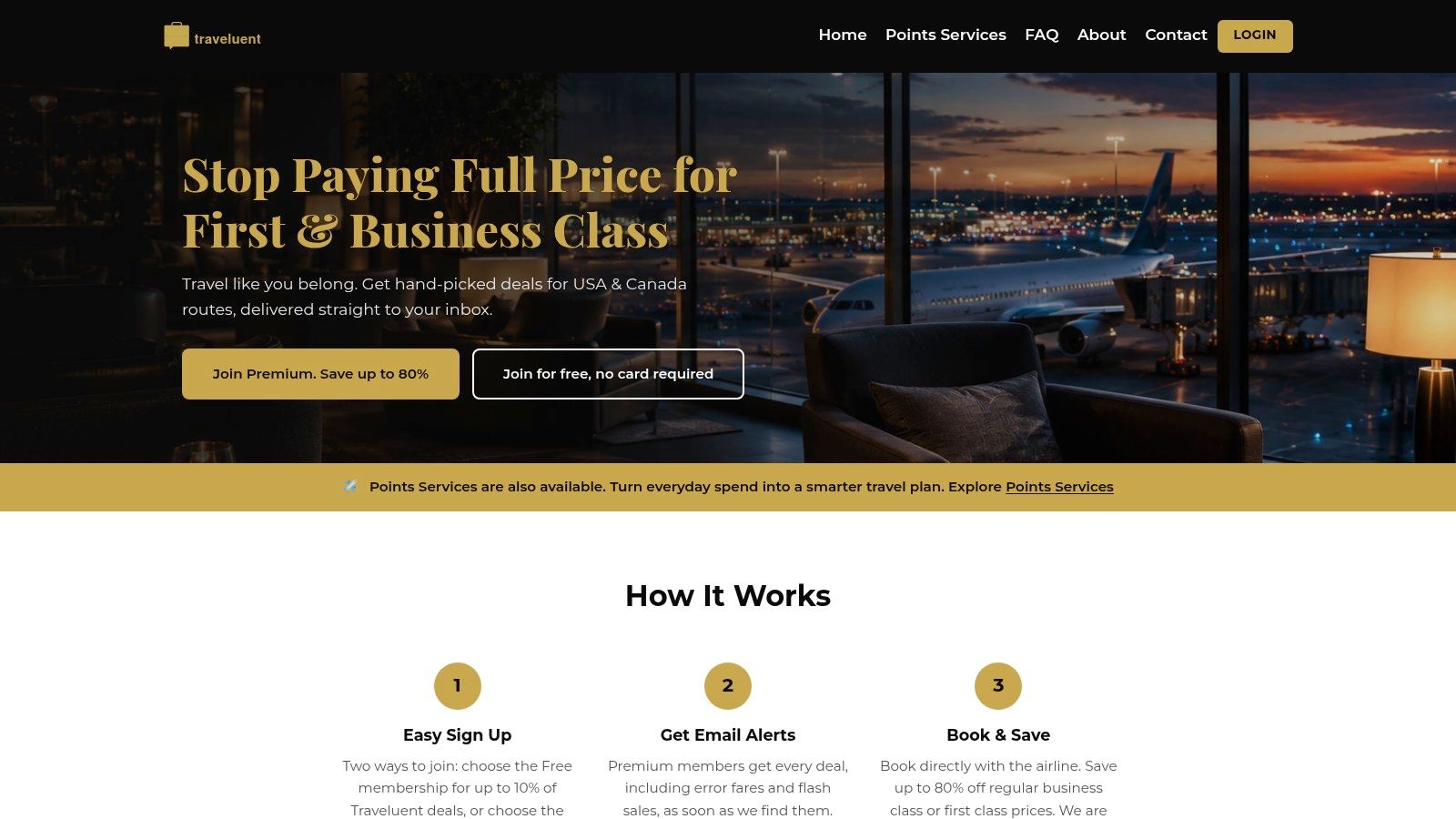
Traveluent takes the opposite approach to fare intelligence. You don't analyze a cycle, you wait for an email. It's a membership based alert service sending hand picked business and first class cash fare deals from U.S. and Canadian airports, and you book directly with the airline when something fits.
That model works best when you're flexible enough to act on a fare inversion you didn't plan for. On a Virgin Australia flight from Canberra to Melbourne, economy was listed at A$629 while business class on the identical departure cost A$449, a difference of A$180 in favor of business, as reported in Australian examples of business class priced below economy. Uneven cabin demand creates those windows, economy fills while business sits open at a lower fare level, and an alert service exists to catch them before they close.
Where Traveluent Fits Best
A free plan offers a limited selection so you can test the alerts before paying. Paid plans provide earlier access to more deals and let you request monitoring for specific routes and dates, which moves it closer to a directed search. It also flags flash sales and occasional error fares, the shortest lived category of first class flight deals.
- Free entry point: You can try alerts before committing to a paid plan.
- Route requests on paid tiers: Members can ask for monitoring on the routes and dates they need.
- Transparent terms: Membership prices and initial payment refund periods are published.
The trade off is timing. Free members receive only part of the deal flow and some alerts arrive delayed, which is a real handicap when a fare correction lasts hours. Availability also depends entirely on what the service finds. If you're pairing a premium fare find with on the ground planning, services built around Northern Spain Travel concierge expertise illustrate the kind of trip support flexible leisure travelers often add after booking. Traveluent suits North American departures and travelers who'd rather react to a strong fare than study a market.
3. Going Elite
You're probably familiar with Going for economy mistake fares. Going Elite is the tier that adds premium economy, business, and first class alerts based on departure airports you select. You pick where you fly from, Going sends what drops, and flexibility does the rest.

The reason a generalist service now sells a premium tier is simple. Premium cabins aren't a niche add on anymore. Delta reported premium seats represented 9% of seats sold in 2009, rising to 28% by 2019, and premium ticket revenue was expected to represent 35% of Delta's projected $19 billion in 2024 revenue, according to reporting on the growth of premium seat revenue at major U.S. airlines. More premium seats in the system means more premium fares to correct, and more chances for an alert service to surface one.
On a New York to Paris round trip cited in that same coverage, premium economy cost about $3,015 on Delta versus $980 for standard economy. That spread is exactly why you shouldn't assume a premium alert is automatically a deal. You still need to compare the alert price against coach on your dates before you book.
Strengths and Limits
- Established platform: Coverage extends beyond premium cabins into Going's broader deal membership.
- Home airport focus: Alerts are based on departure airports you choose, so they stay geographically relevant.
- Published pricing: Membership costs are listed before you join.
Premium cabin deals require the higher priced Elite tier, and Going doesn't monitor a specific corporate itinerary for you. If your dates are fixed, many alerts won't fit, which is why travelers chasing first class last minute deals on a set schedule often need route specific monitoring instead. Going Elite suits flexible travelers who'll build a trip around a fare, not the other way around.
4. UpFront Fares
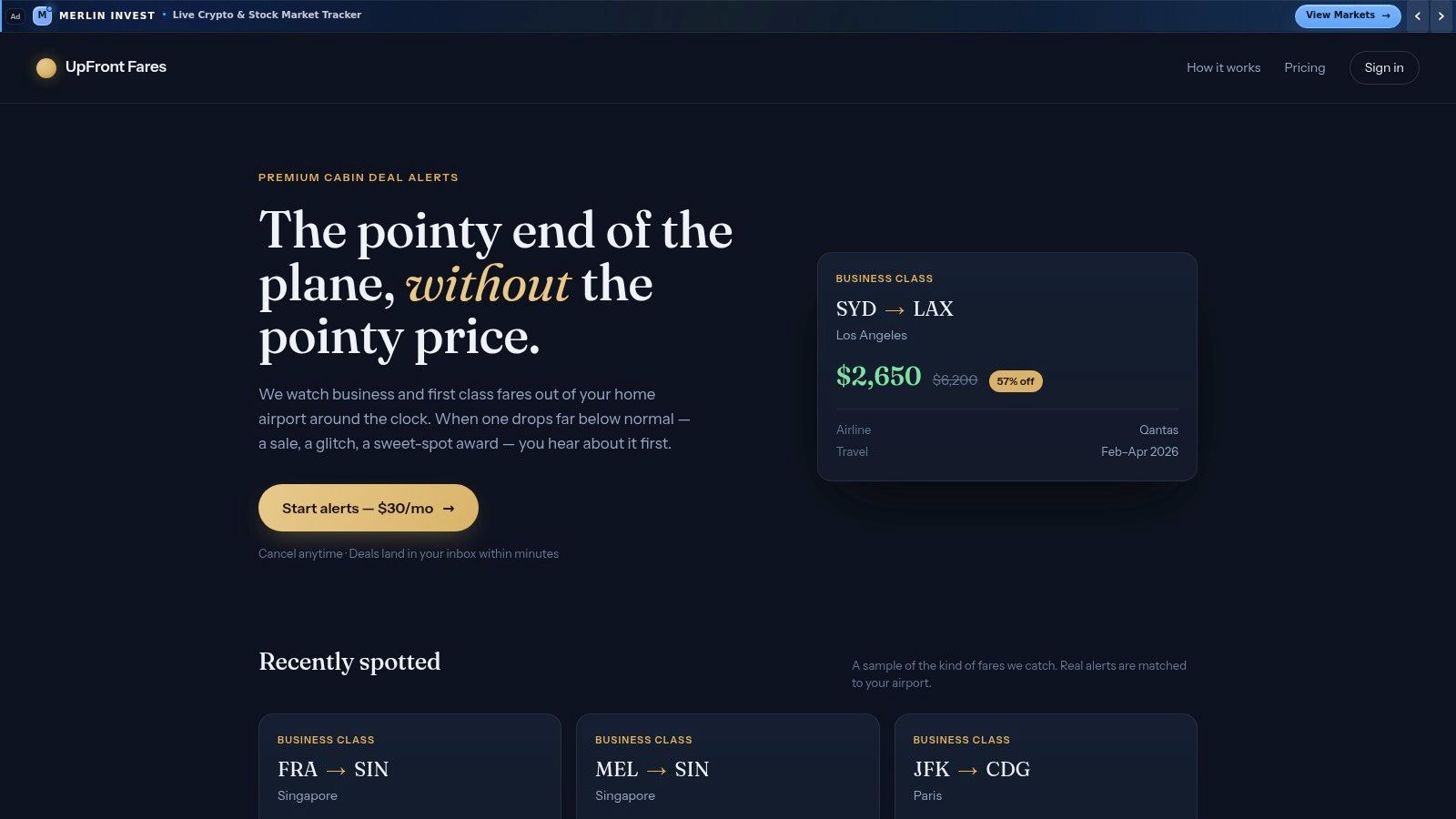
UpFront Fares narrows the alert model to one job. It watches for business and first class cash fare drops, lets you choose a home airport and preferred regions, and only alerts you when a fare clears a minimum discount threshold you set yourself. That threshold is a small feature with a big effect, because it filters out noise.
You need that filter because premium pricing is increasingly segmented rather than bucketed. In academic simulations where an airline identifies business versus leisure requests with 80% accuracy, the first mover could achieve as much as a 17% revenue gain by offering more precisely targeted prices, as shown in research on segmented continuous pricing in airline distribution. Continuous pricing lets quotes vary across a range instead of snapping to fixed booking classes. Two travelers can see different prices for the same seat.
What You Get and What You Don't
Alerts include fare details, caveats, and booking instructions, and the service says it sends them within minutes of finding a deal. You book through an airline or travel site, not through UpFront Fares itself. Setup is simple and the monthly price is clearly stated.
- Premium only focus: Every alert is a business or first class cash fare, nothing else.
- Threshold control: Your minimum discount setting decides what reaches your inbox.
- Clean booking path: Purchase happens with another provider, so the alert service isn't your seller.
A low quote can vanish the moment inventory or forecast assumptions change, so an alert is a starting gun, not a reservation.
Deals, especially mistake fares, can disappear quickly, and there's no free tier shown on the pricing page to test fit first. UpFront Fares suits cash fare hunters who know their home airport and target regions, want first class flight deals without points complexity, and can book fast when an alert lands.
5. First-Class.com
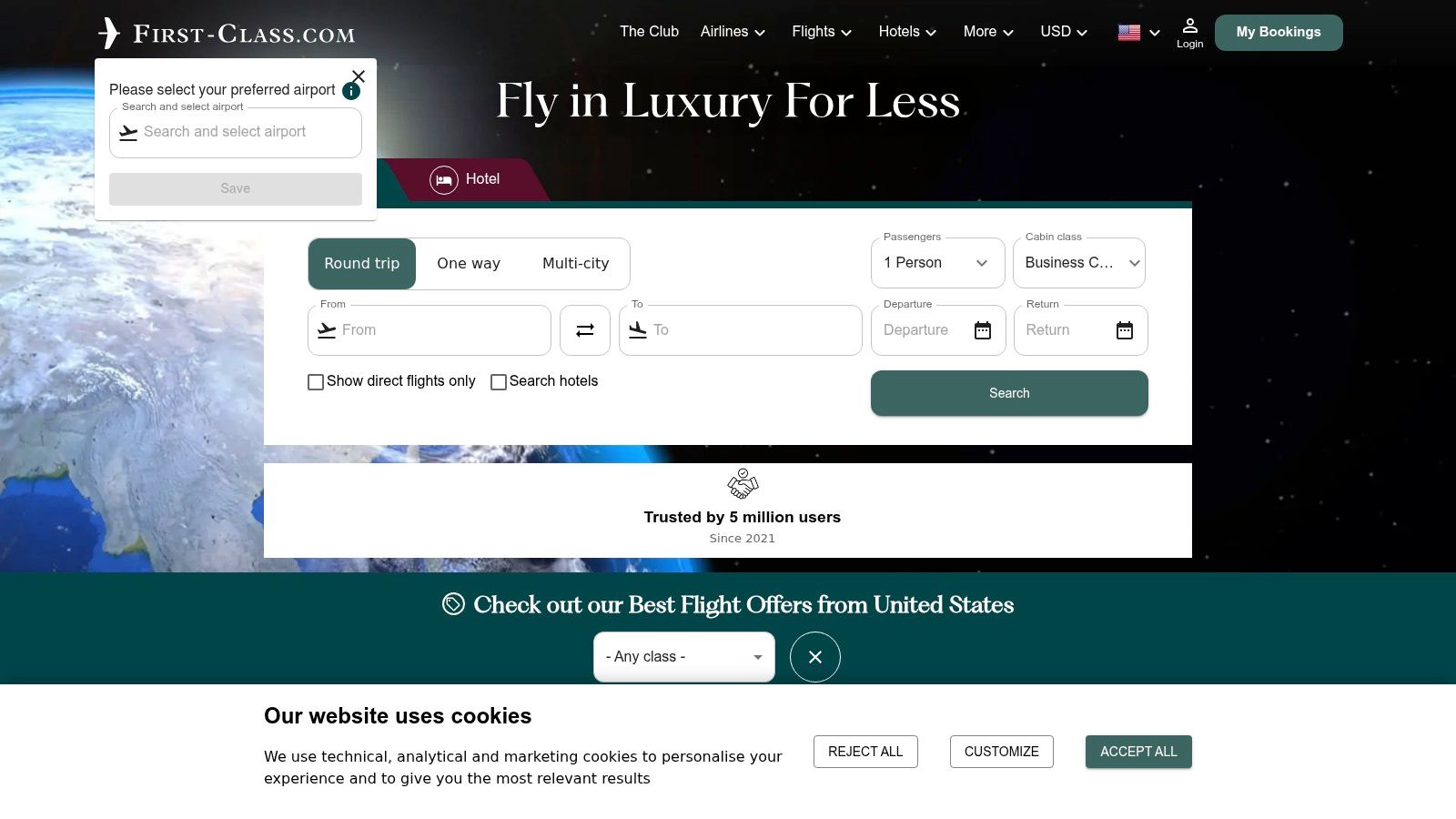
Most sources on this list push deals to you. First-Class.com lets you go looking. It's a premium travel search and deals site where you compare business and first class options across multiple travel sites, browse by destination, travel month, cabin, airline, or alliance, and join a free Club membership for member only offers and email alerts.
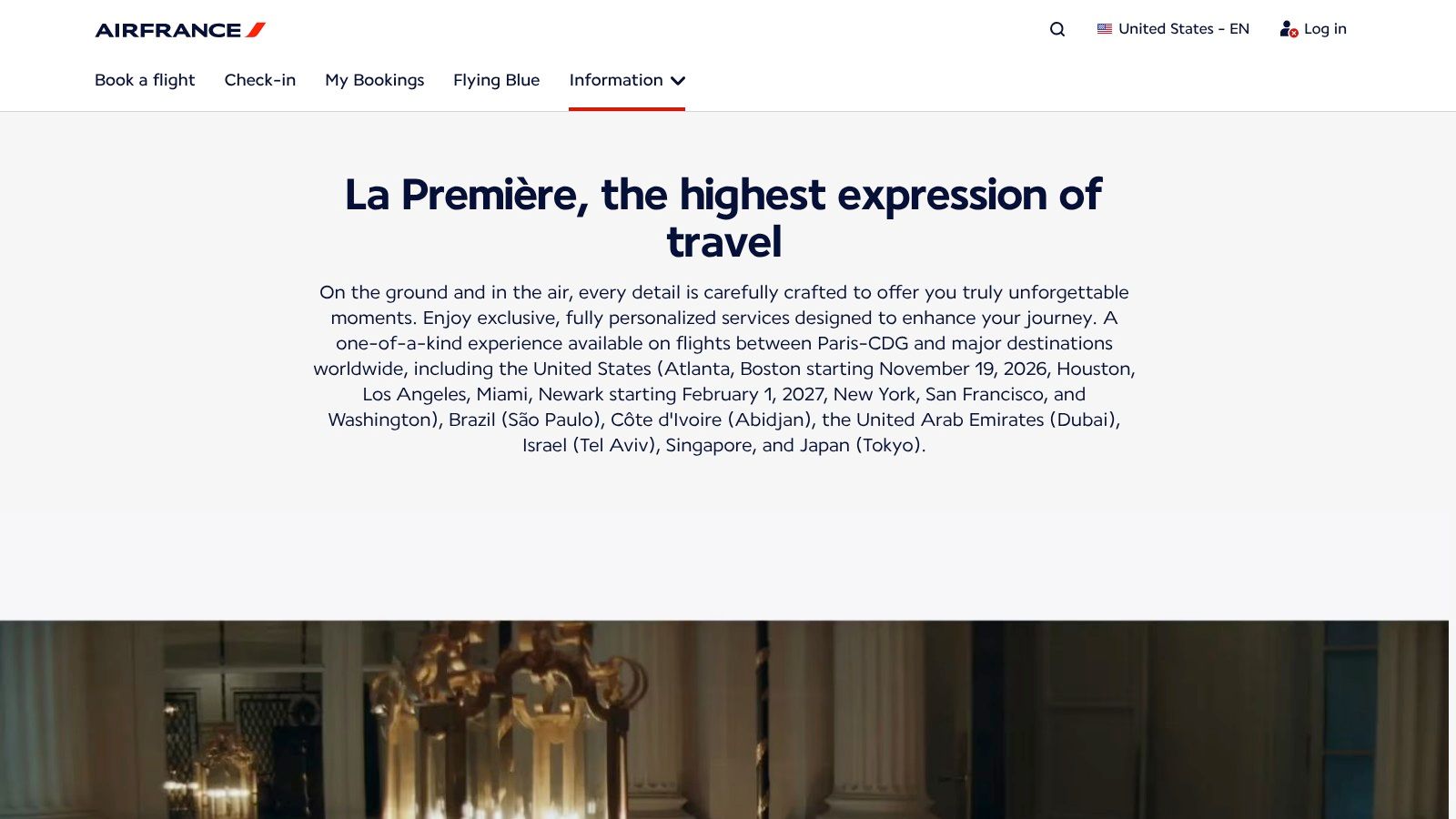
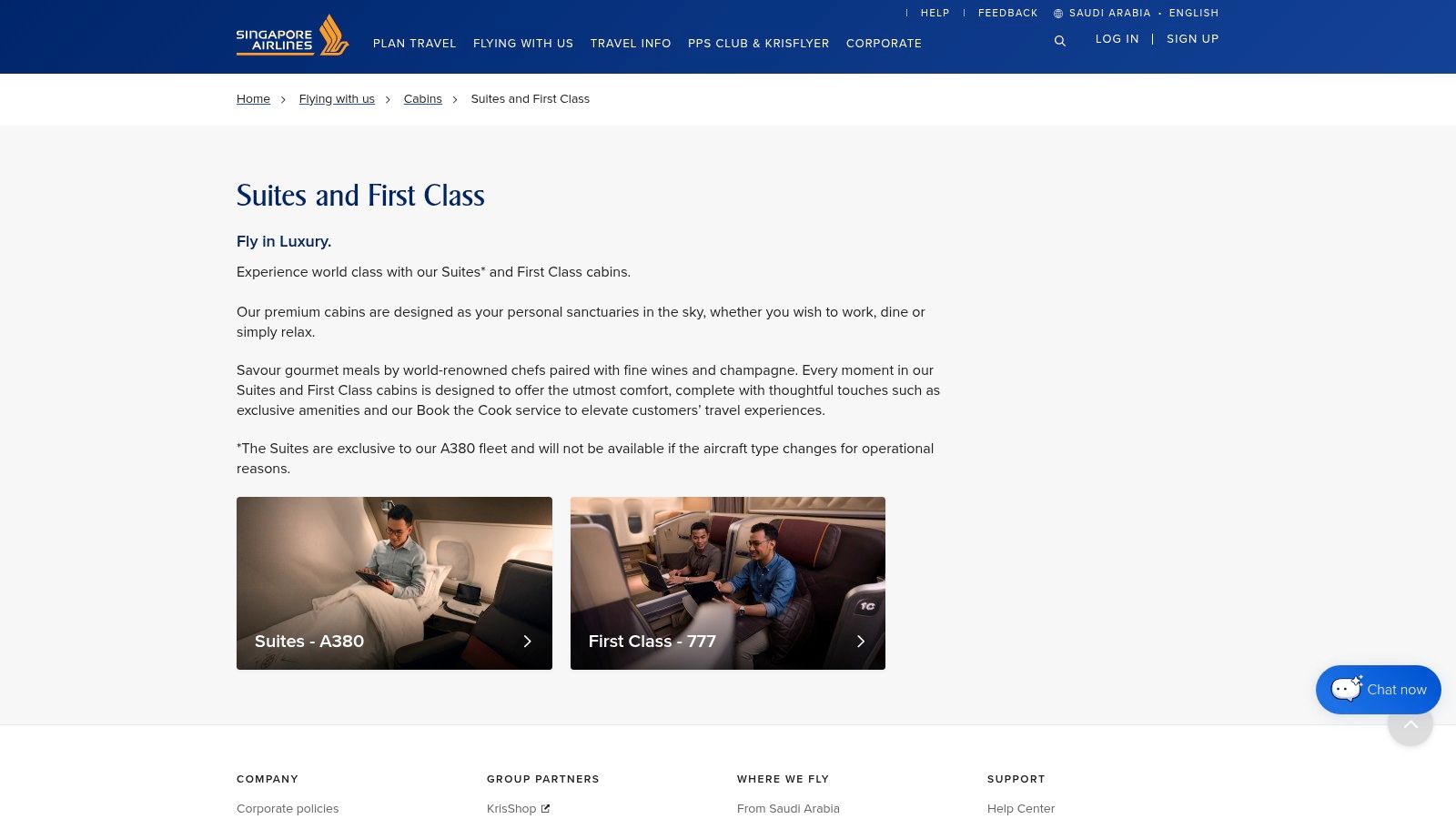
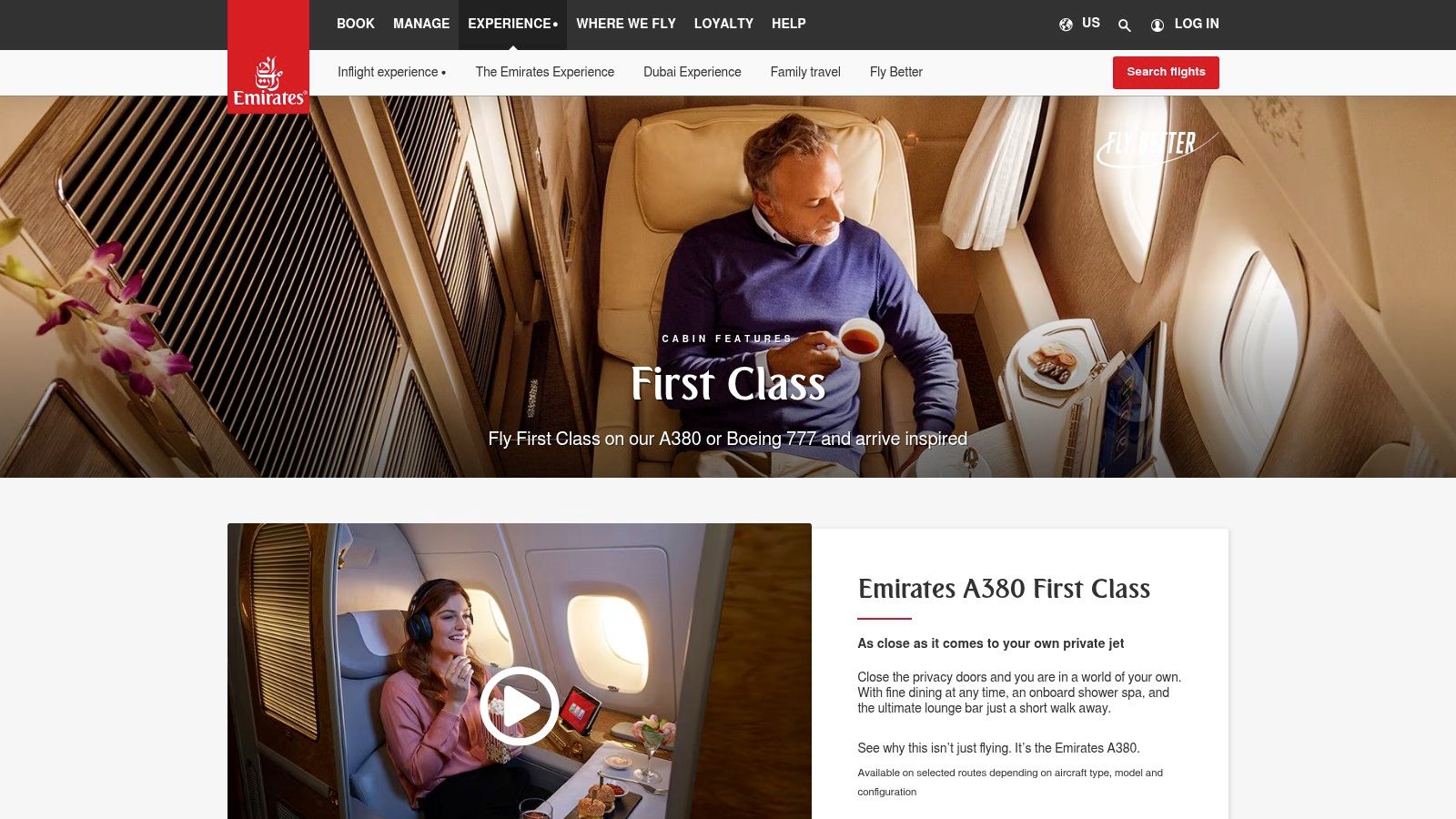
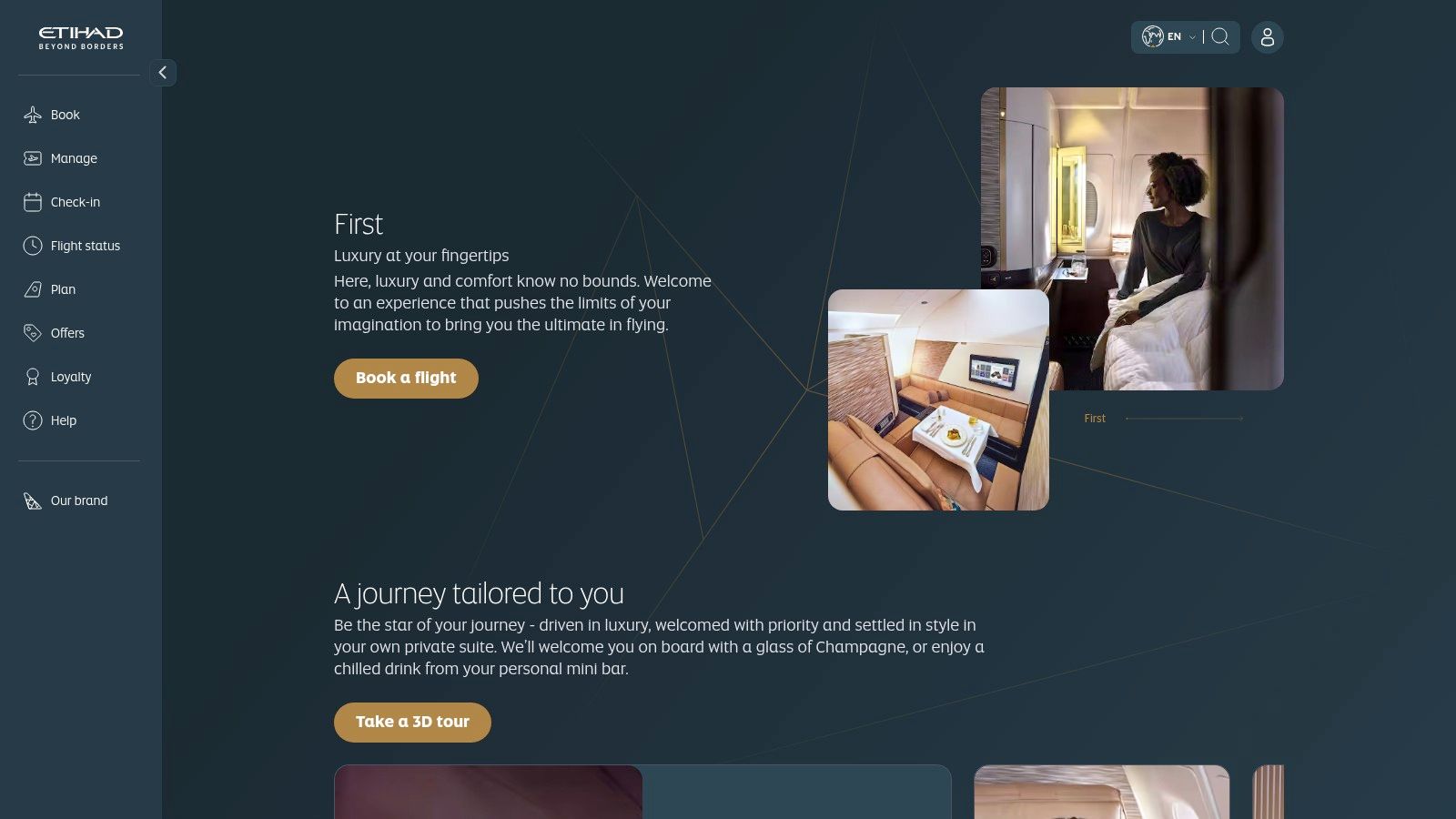
A comparison tool is only as good as your ability to compare like with like, and premium cabins make that harder than it sounds. Recent industry coverage identifies Emirates, Singapore Airlines, Lufthansa, Air France, ANA, and Cathay Pacific among airlines still maintaining distinct international first class cabins, while Delta and United no longer sell a separate international first product, as explained in guidance distinguishing domestic first, business, and true international first class. A fare labeled first class might be a domestic recliner, a lie flat business seat, or a private suite. Headline price alone tells you none of that.
Flexibility conditions distort comparisons just as much. One reported British Airways example for London Heathrow to Doha priced fully flexible economy at £4,494 while business class was available for £3,029, making business £1,465 cheaper, as detailed in analysis of why business class can undercut flexible economy fares. If you compare cabin labels without fare rules, you'll misread that result completely.
Using It Well
- Search plus discovery: It combines direct flight comparison with browsable deal browsing.
- Free Club membership: Member only offers and email alerts cost nothing to try.
- Multiple providers: You can compare offers from several sellers in one place.
Some results lead to partner booking sites with varying sellers and terms, so you must verify restrictions, baggage, and final price with the booking provider. It's also less suited to fare cycle analysis or company travel needs. First-Class.com suits self directed shoppers who want to compare premium options side by side right now rather than wait for an alert.
6. Straight to the Points
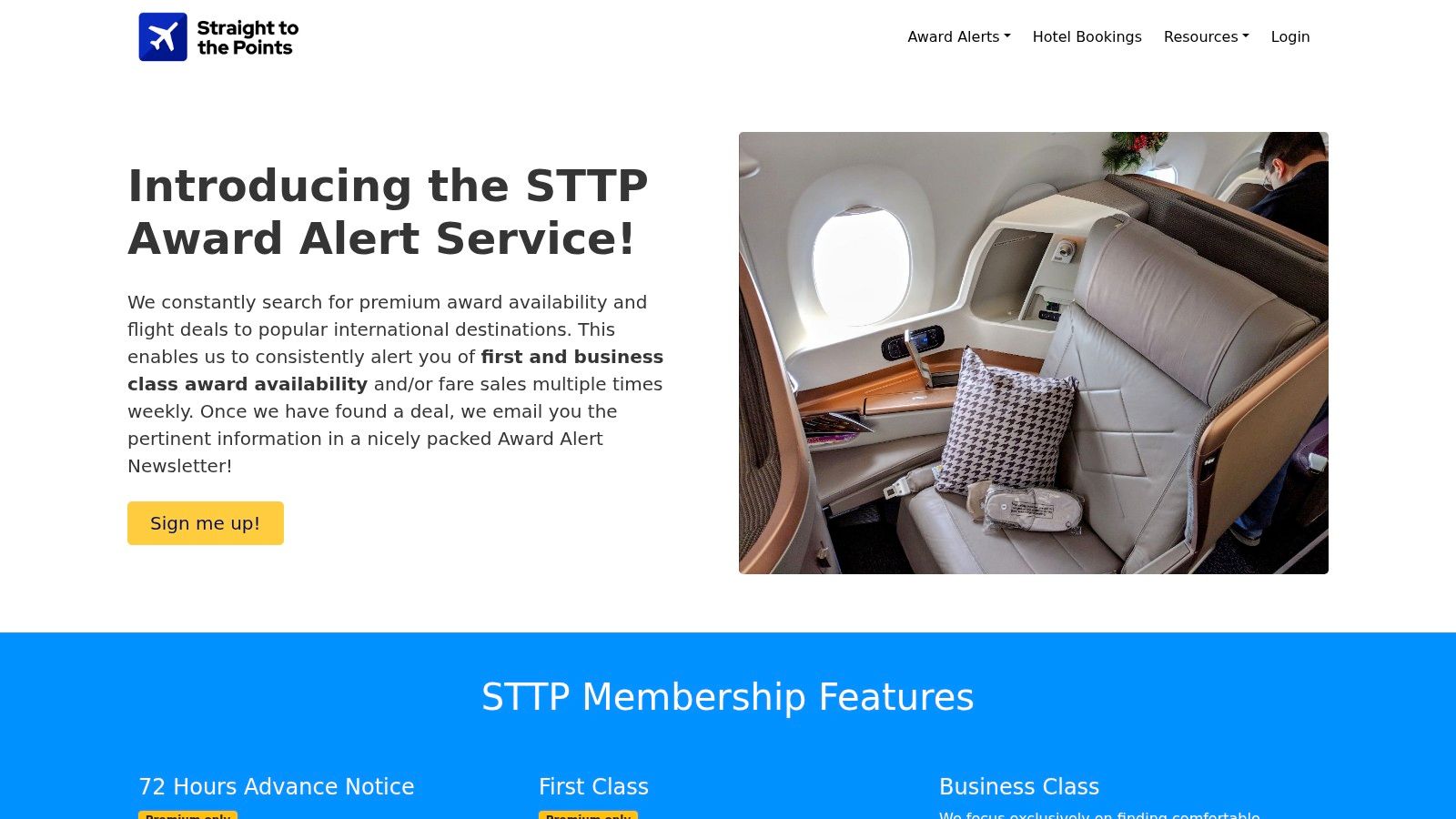
Cash isn't the only currency that gets corrected. Straight to the Points alerts you to business and first class award seats, with route, dates, airline, taxes, and booking instructions, plus potential transfer partner options for paying with points. If you're holding transferable balances, this is a different market with different bargains.
Timing discipline matters even more here because the old advice to wait for last minute premium discounts is unreliable. McKinsey reports that at a large U.S. airline, roughly half of premium seats are booked more than 21 days before departure, with leisure travelers now accounting for close to half of premium bookings, according to McKinsey analysis of premium cabin booking patterns. Premium seats don't reliably sit empty until the final days. When award space appears on a route you want, waiting is usually the expensive choice.
That reality shapes how you should think about how to maximize airline miles for premium cabins. The value isn't in hoarding points for a theoretical perfect redemption. It's in converting them when a bookable premium seat shows up at a sensible rate.
Who This Serves
- Booking guidance included: Alerts carry dates, taxes and fees, and instructions, not just a route name.
- Free plan available: You can start without paying, with premium members getting SMS alerts and earlier access.
- Group aware: Some alerts identify options for multiple travelers, which award hunters know is rare.
Award inventory can disappear and isn't guaranteed, and point transfers may be difficult to reverse, so you should confirm the seat exists before moving points. It's not suited to travelers seeking cash fares only. Straight to the Points suits points collectors who are comfortable with loyalty programs and want premium award space found for them rather than hunting airline calendars daily.
7. AwardFlare
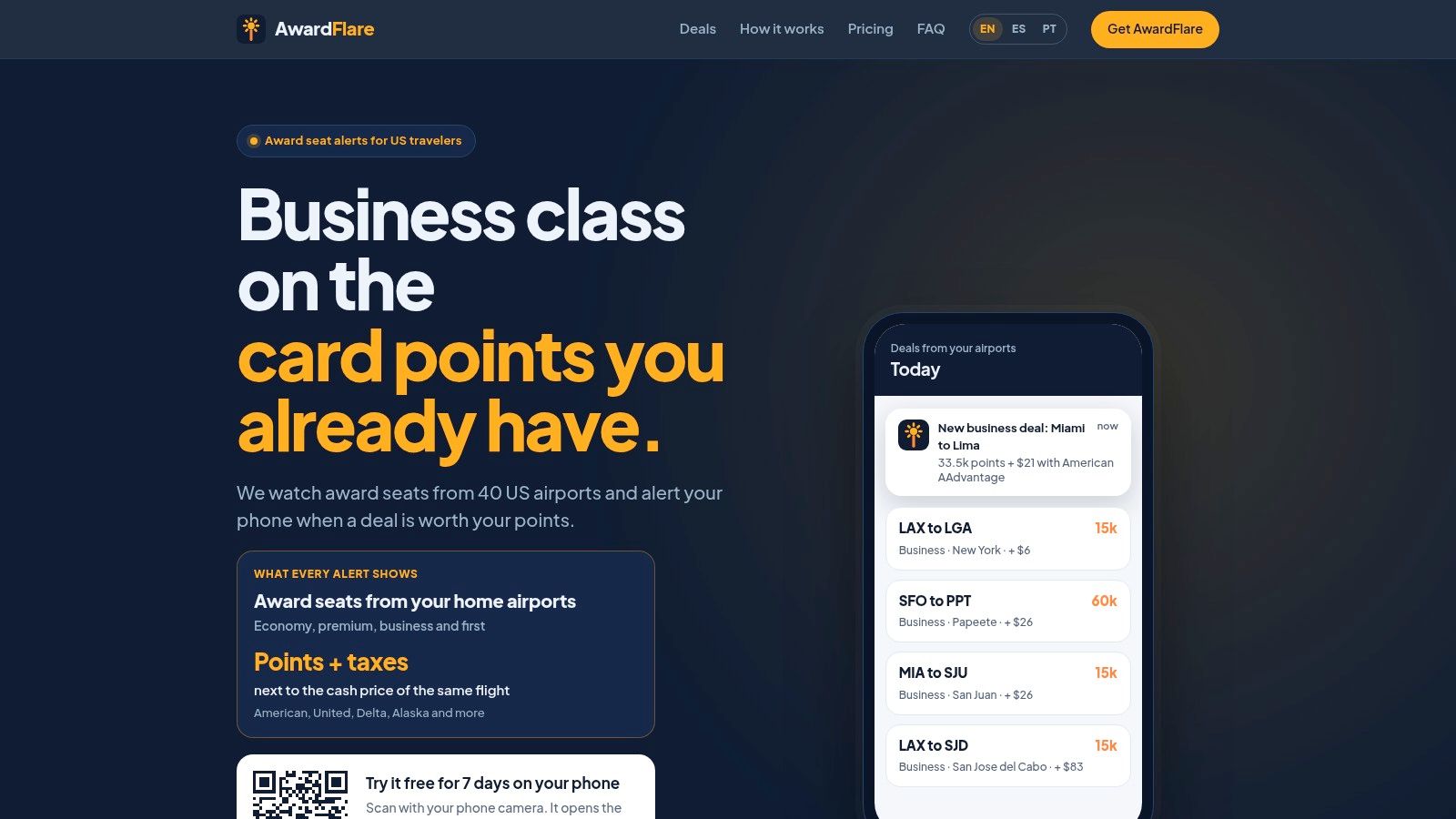
AwardFlare monitors premium cabin award seats from 40 U.S. airports and sends phone push notifications, a daily email, and custom route alerts. Each alert shows points prices, taxes, and often a comparable cash price, along with potentially relevant transferable card points. That cash comparison is the detail that keeps you honest about whether an award is actually a deal.
You need that comparison because cabin price relationships reverse more often than most travelers expect. A 2026 comparison of Indian domestic routes found on Delhi to Srinagar, economy increased 85.1% in June 2026 while business fell 20.1%, and on Bengaluru to Chennai economy rose 34.9% while business dropped 49.3%, as reported in data on economy fares rising while business class fares declined. Those were presented as future dated comparative figures in that coverage, but the pattern is the point. When business cash fares fall that hard, burning points at a standard rate can be the worse deal.
Strengths to Weigh
- Value context: Taxes and cash price comparisons help you assess whether an award is worth the points.
- Less manual searching: Monitoring reduces the need to repeatedly check airline award calendars.
- Clear commercial terms: An annual price and a money back window are listed.
Coverage is limited to those listed U.S. departure airports, award space is limited and can disappear, and you must confirm availability before transferring points. It also requires real familiarity with loyalty programs and redemptions, so beginners may find the learning curve steep. AwardFlare suits U.S. based points holders hunting lower mileage premium awards who want push alerts and a built in cash reality check on every first class flight deal priced in points.
First-Class Flight Deal Services: 7-Way Comparison
These services address different parts of the premium-fare market: cash-price monitoring, deal alerts, flight search, or award-seat tracking. The comparison highlights how each works and which traveler is most likely to benefit. A fare alert identifies a possible buying event, but prices and availability can change before booking.
| Service | Fare Type & Approach | 🔄 Complexity & Resources | 📊 Expected Outcome | 💡 Ideal Use Case & Key Advantage |
|---|---|---|---|---|
| Passport Premiere | Cash fares; premium-fare monitoring and market-cycle guidance | Medium; paid membership, with fare research and timing decisions | Helps identify price drops and assess fares against market value; savings are not guaranteed | Travelers seeking international business- or first-class fares and fare-market insights |
| Traveluent | Cash fares; hand-picked business- and first-class deal alerts | Low; free or paid membership, with email alerts and optional route requests | Surfaces deals, flash sales, and occasional error fares; availability is not guaranteed | U.S. and Canadian travelers who want alerts, with route monitoring available on paid plans |
| Going Elite | Cash fares; premium-cabin deals from selected departure airports | Low; paid Elite tier and flexibility on departure dates and destinations | Provides premium-economy, business-, and first-class deal alerts | Flexible travelers wanting premium deals plus broader flight-deal features |
| UpFront Fares | Cash fares; alerts tailored by home airport, region, and discount threshold | Low; paid service with basic preference setup | Sends alerts for qualifying fare drops; deals may sell out or not fit chosen dates | Travelers seeking focused premium-cabin cash-fare alerts and a stated discount threshold |
| First-Class.com | Cash fares; flight search, comparison, and deal browsing | Low; free Club membership optional; users verify terms with booking providers | Helps compare premium-cabin offers across sites and find member deals | Shoppers who want search and deal discovery in one place |
| Straight to the Points | Award seats; business- and first-class points-and-miles alerts | Medium; requires suitable points, loyalty-program knowledge, and booking steps | Highlights award availability and booking details; seats can disappear | Points users seeking premium award seats, including alerts with transfer options |
| AwardFlare | Award seats; monitoring across 40 U.S. departure airports | Medium; requires points knowledge and availability checks before transfers | Reports points prices, taxes, and some cash-price comparisons; inventory is limited | U.S.-based award travelers who want alerts and award-value details |
How to Choose Your First Class Deal Strategy
A first-class deal is a market-timing problem, not a coupon hunt. Start by deciding whether you have more money, points, flexibility, or time to spend. Each source tracks a different kind of opportunity, and the wrong fit can leave you watching fares that do not match how you travel.
For straightforward cash bookings, choose an alert service based on how much control you need. Going Elite suits travelers flexible on departure airports and dates. Traveluent offers route requests on paid tiers, while UpFront Fares lets you set a discount threshold to filter alerts. First-Class.com is a better match for shoppers who prefer to search and compare offers when they are ready, rather than wait for an email.
Points-rich travelers who want to limit cash spending should focus on award alerts. Straight to the Points provides booking guidance and transfer-partner options; AwardFlare offers push notifications and cash-price comparisons for covered U.S. airports. Both require careful timing. Confirm award-seat availability before transferring points, since transfers may be difficult to reverse.
Frequent international premium travelers with limited date flexibility may benefit more from fare monitoring. Passport Premiere is designed to track fare changes and buying opportunities on routes travelers already need. That approach can suit corporate travel managers and long-haul flyers, for whom schedule certainty and fare rules matter alongside the price.
A true deal means paying below market value, not just below the sticker price the airline printed first.
Before booking, confirm the cabin on the specific aircraft and review refund, baggage, and change rules. Compare the premium fare with coach on the same flight. Independent fare buckets can produce occasions when business class costs less than coach, so the comparison is worth checking rather than assuming a premium cabin always carries a higher price. Travelers planning the full trip may also consider the ground experience, including lounges and luxury Dubai airport transfers on arrival.
Choose one source that fits your travel habits, set it up for a realistic route from your home airport, and assess the alerts during your next booking window. Signing up for every service can create noise without improving your timing. One well-matched source, checked against coach fares, can build a clearer picture of first class flight deals than random browsing.
If you fly international Business or First Class and want to pay less than an airline's initial asking price, Passport Premiere offers fare monitoring, market analysis, and member guidance focused on fare drops and corrections. Review its published membership fees and Fare Monitor demonstration before deciding whether its approach fits your routes and booking needs.