Business class is the premium cabin between economy and first, but it isn't one standard product. On some flights it means a lie-flat bed and fast-track airport service, on others it's just a wider seat with a nicer meal, and that's exactly why people overpay.
Most advice gets this wrong because it treats business class like a fixed upgrade. It isn't. The seat, the service, and even the fare can change by airline, aircraft, and route, so the only honest way to judge it is flight by flight.
What Business Class Actually Is on a Modern Flight
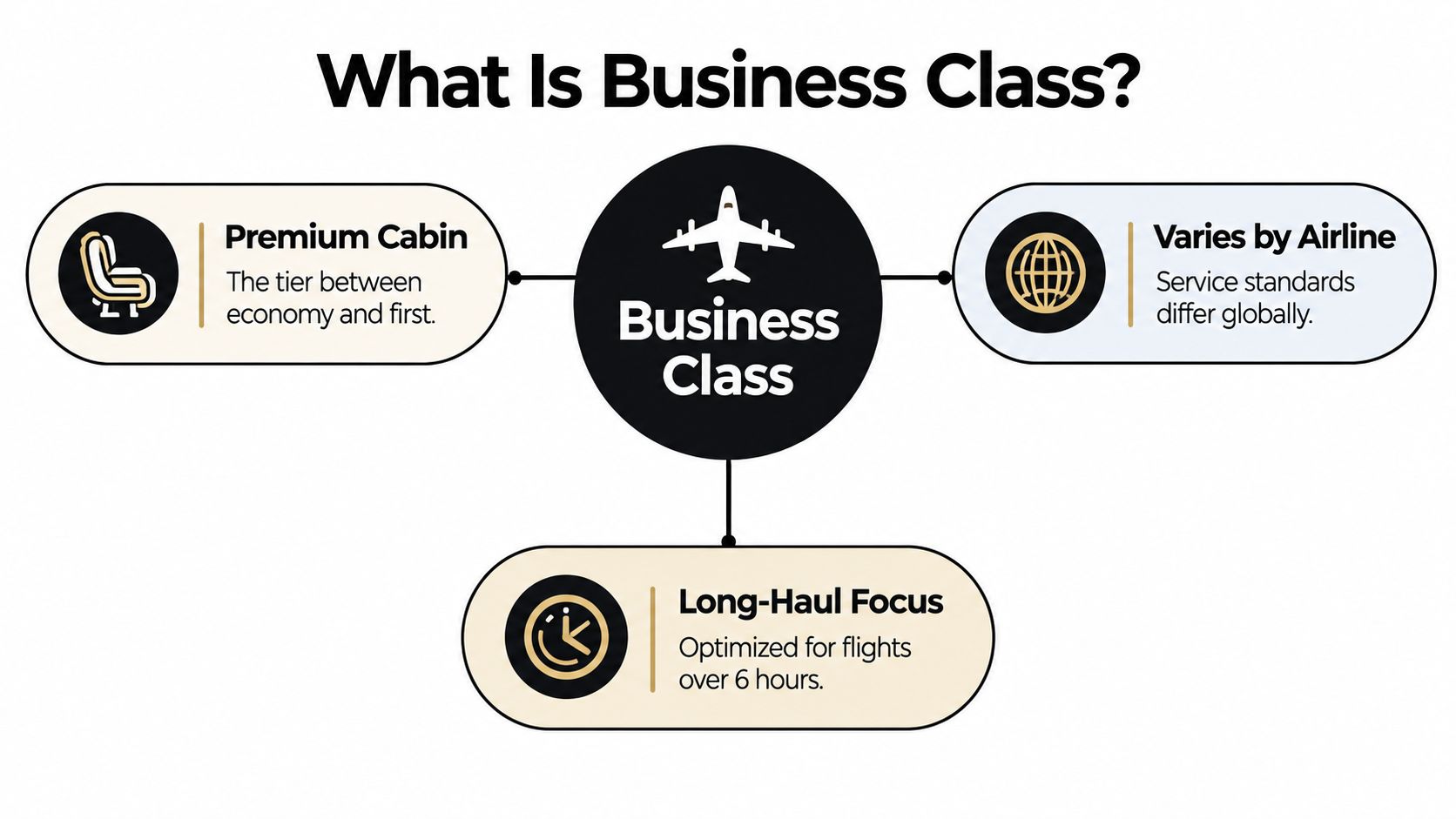
Business class sits between economy and first, but that simple position hides the full story. It is a premium travel bundle, not a single seat spec, and airlines build that bundle differently depending on aircraft, route, and market. If you want the plain-English answer to what is business class flight, it's the cabin you buy when you want more sleep, more space, and less friction than economy, without paying first-class pricing.
What you are actually paying for
The core promise is practical. You get a better seat, better airport treatment, and a calmer onboard experience, usually with priority check-in, boarding priority, lounge access, upgraded meals, and more personal space. But the label alone tells you very little, which is why a sharp buyer checks the actual aircraft and seat map before booking. Passport Premiere's overview of premium cabins is useful because it frames business class the right way, as a category you need to decode rather than trust blindly.
Why the same cabin name can feel different
One airline may sell a long-haul pod with a true bed, while another may use a recliner on a shorter route. That means the same booking class can produce a very different trip, and the gap shows up where it matters most, in sleep and productivity. Business class is not a global standard, it's a marketing label over a set of independently designed products. If you remember one thing, remember this, judge the flight, not the phrase.
Practical rule: if the itinerary, aircraft, and seat map don't support real rest or real work, the fare premium is probably fluff.
How Business Class Evolved Into the Lie-Flat Cabin
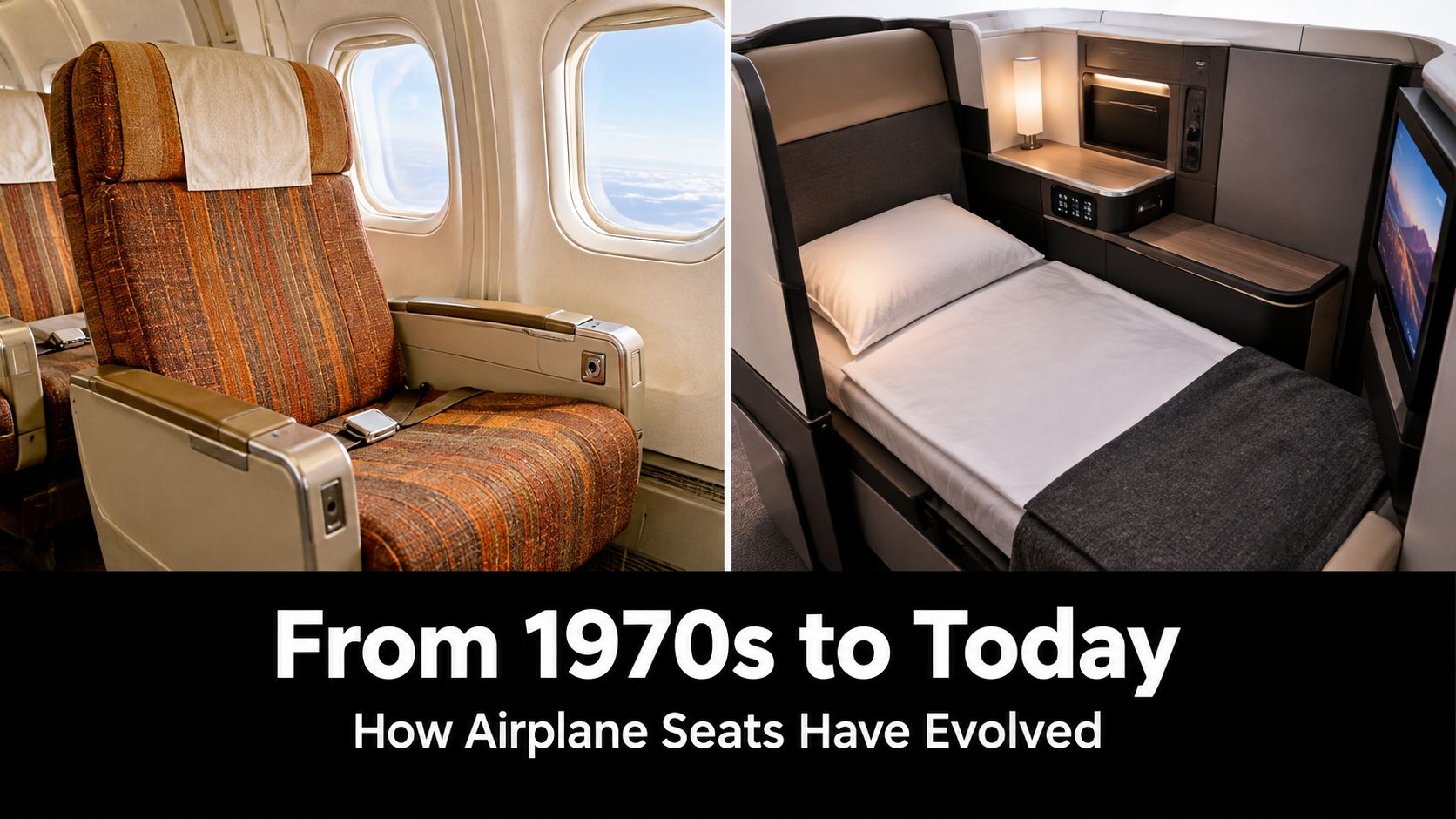
Business class began as a practical answer to a specific problem: full-fare travelers wanted more comfort and faster airport handling without paying for first class. In the late 1970s, airlines tested upgraded services before turning them into dedicated premium cabins. Delta's Medallion Service, Pan Am's Clipper Class, and British Airways' Executive Cabin were prominent examples from that period. Qantas is widely credited with introducing the first clearly differentiated business-class cabin in 1979, on Boeing 747 routes between Australia and the United States Retrowow.
The original deal was value, not indulgence
The early Qantas product offered wider seats, more legroom, improved meals and entertainment, dedicated check-in, priority baggage handling, and dedicated cabin crew. Its reported fare was about 15% above the standard flexible economy fare, according to Simple Flying's history of long-haul business class. The appeal was straightforward: arrive rested, keep working, and spend less time dealing with airport friction. That remains the right test for any premium fare. If the upgrade does not improve sleep, productivity, or the total trip cost, the branding is doing more work than the product.
How the modern product changed
The seat eventually became the defining feature. Long-haul business class shifted from a wider recliner to an angled-flat or fully flat bed, often with privacy partitions and stronger onboard support. A guide to business-class lie-flat seats explains why that change matters. A bed can protect sleep on an overnight flight, while a private workstation can make a daytime trip productive.
The label still does not guarantee either. Some aircraft retain recliner-style seats, and airlines offer different products under the same cabin name. Check the aircraft, seat map, and route before paying. Business class evolved into the lie-flat cabin, but the aircraft assigned to your itinerary decides whether you receive it.
The Full Bundle of Benefits You Get in the Cabin
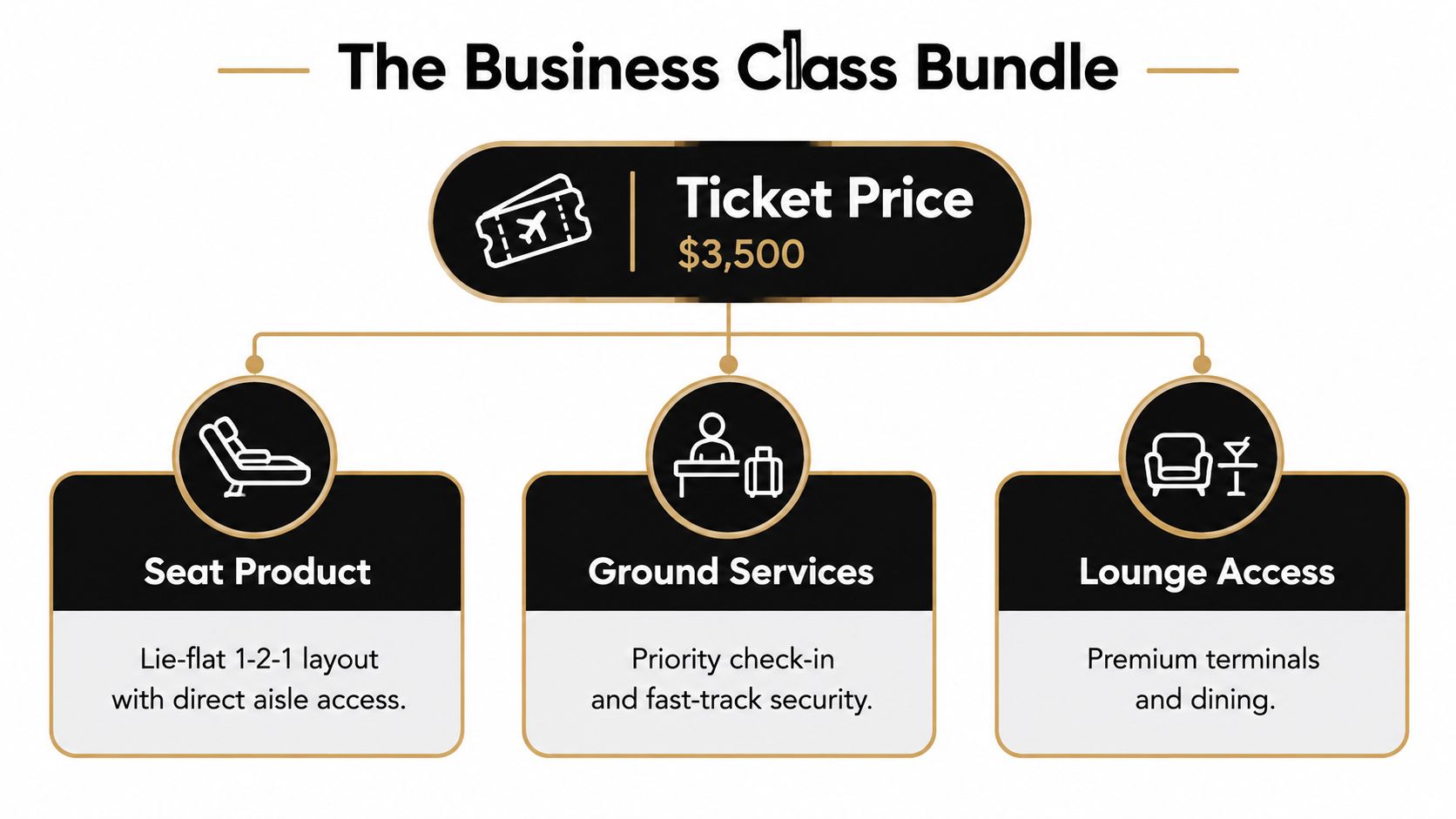
A serious long-haul business-class ticket is a system, and the seat is only one part of it. The package may include lie-flat seating, direct aisle access, priority airport processing, lounge access, better dining, power, and stronger entertainment. Airlines combine those features differently, so judge the itinerary rather than the cabin label Econstor.
Start with the seat, then check the layout
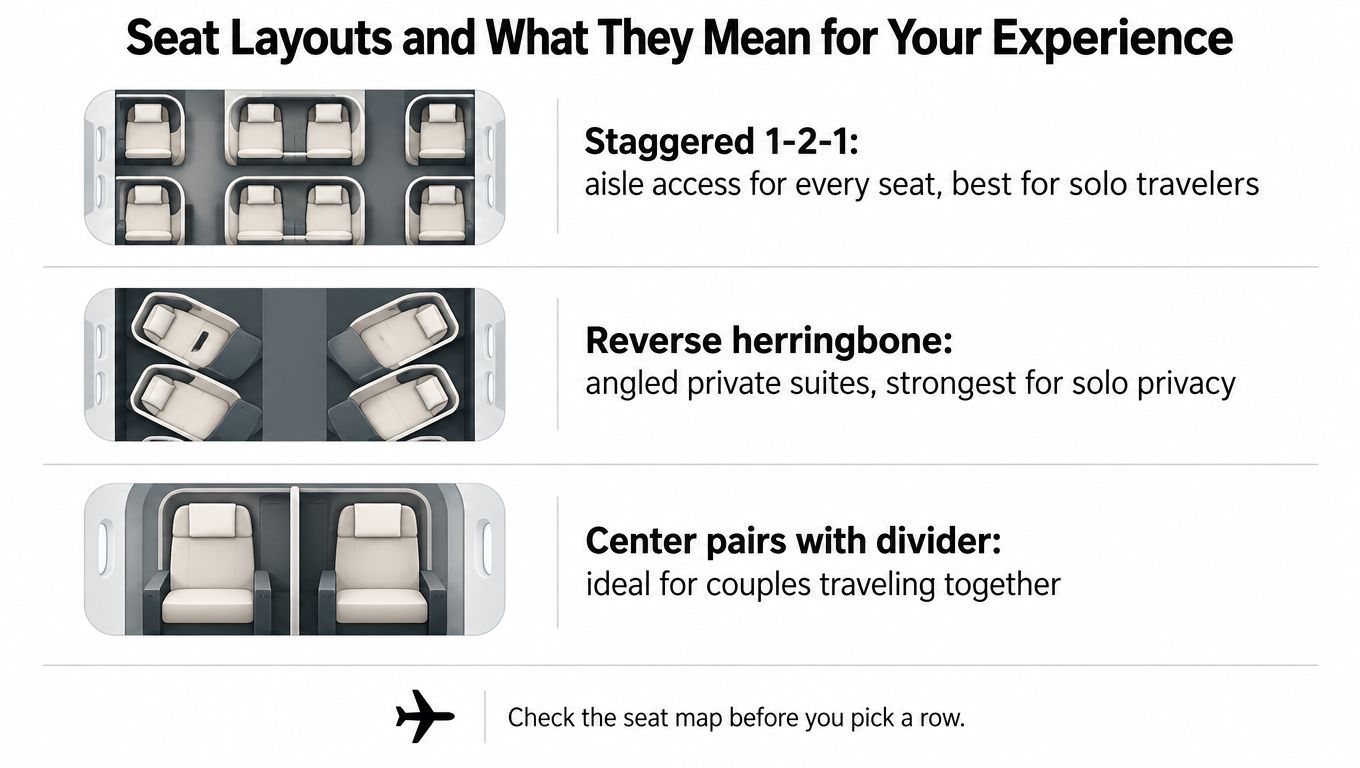
A proper long-haul bed is usually about 76 to 82 inches long, while fully flat seating is typically around 180 degrees on wide-body aircraft AeroCorner. Those specifications determine whether you can sleep or spend the flight half-reclined. A 1-2-1 layout generally gives every passenger direct aisle access. In a 2-2-2 cabin, a window passenger may need to climb over a seatmate.
For overnight flights, bed length, privacy, and aisle access matter more than champagne or elaborate menus. Use this business-class seat guide before selecting a seat, because two products in the same cabin can deliver very different sleep and work conditions.
Check the airport-side value
Priority check-in, fast-track security, lounge access, and extra baggage allowance can save time before departure and during connections Brussels Airlines. Those benefits have practical value when the airport is busy or the itinerary includes a long connection. Lounge access may not apply on arrival, so confirm where and when you can use it before comparing fares.
Judge amenities by their payoff
Upgraded dining is pleasant, but it rarely decides whether the premium makes sense. Sleep quality, a usable workspace, and faster airport handling have a clearer effect on the trip. Match each benefit to your priority, then check the aircraft and seat map before paying.
How Business Class Compares to Other Cabins
Business class is not a standardized upgrade. It is a variable product priced against the itinerary. Choose it when sleep, productive arrival, or faster airport handling will repay the fare. Premium economy often wins on daytime routes, economy wins when total trip cost controls the decision, and first class only makes sense when the route is long, the product is a true suite, and the fare gap to business class is small.
| Cabin | Seat and Sleep | Priority and Lounge Benefits | Typical Fare Position | Emissions vs Economy |
|---|---|---|---|---|
| Economy | Standard seat, limited recline, little sleep value | Usually minimal | Lowest | Baseline |
| Premium Economy | More space and better daytime comfort, usually not a bed | Some priority features on select airlines | Above economy, below business | Lower than business, higher than economy |
| Business Class | Lie-flat or angled-flat seat, often the strongest option for overnight rest | Priority services, lounge access, better baggage and boarding benefits | Well above economy | Roughly four times economy on average Greenpeace factsheet |
| First Class | Most private and exclusive when available | Highest ground and onboard priority | Highest | Roughly five times economy on average |
The deciding factor is the flight, not the label. An overnight sector where you must work or arrive functional can justify business class. A daytime flight under six hours usually does not need a bed, making premium economy the sharper purchase when it provides enough space without the full premium.
Check the fare difference against the outcome you need. Airlines price by route, aircraft, inventory, and booking timing, so two business-class tickets can offer very different value. A dated seat, a poor connection, or a short daytime sector can erase the benefit. A well-designed overnight product can protect sleep and productivity.
Bottom line: pay for business class when it buys sleep, productive time, or airport efficiency. Do not pay for the cabin name alone.
The Productivity and Environmental Trade-Off
Business class earns its price when it protects sleep or productive time, not when it merely adds polish. On a long-haul overnight, a lie-flat seat can let you arrive ready for meetings. That is a practical result. On a short daytime flight, the same upgrade may buy little beyond a wider seat and better service.
The environmental trade-off deserves equal weight. As the table above shows, Greenpeace puts business-class emissions at roughly four times economy, versus about 1.5 times for premium economy. First class sits at roughly five times economy. A premium seat therefore carries a larger per-passenger footprint, not just a higher fare.
When the premium makes sense
Choose business class when the itinerary makes sleep or work time valuable. An overnight flight followed by meetings can justify the cabin if lying flat protects your performance. For a company travel policy, compare the fare with the cost of lost working time, a hotel night, or a poor arrival day.
The aircraft matters as much as the ticket label. A modern lie-flat seat can deliver the sleep benefit advertised. An angled seat, weak privacy, or an awkward connection can reduce that benefit sharply.
When it doesn't
Skip business class for a short daytime nonstop when you will not sleep and premium economy provides enough space. A rail alternative on a regional route may reduce both cost and emissions. Judge the itinerary by three outcomes: sleep, productive time, and total trip cost. Comfort alone is a weak reason to pay the premium.
Why Business Class Can Sometimes Cost Less Than Coach
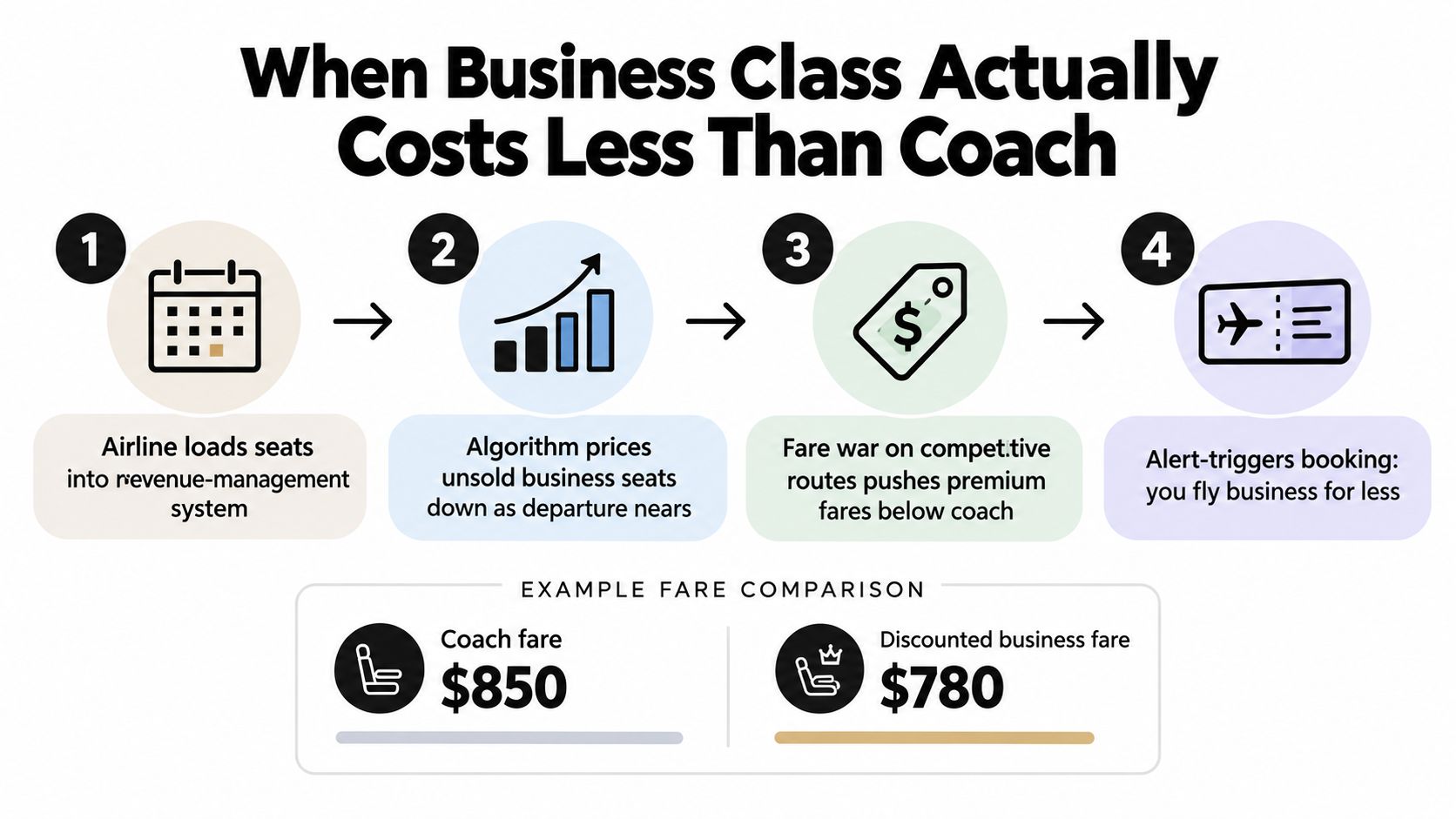
Business class can cost less than economy when the fare rules, not the cabin label, drive the price. Airlines separate tickets by fare bucket, flexibility, booking conditions, minimum-stay rules, and remaining inventory. A restrictive business fare can therefore undercut a flexible economy ticket on the same route.
Documented examples put business class at $471 versus economy at $575, and business at $373 versus economy at $480 One Mile at a Time. These are exceptions, not a normal price relationship. Still, they show why comparing cabin labels alone is poor fare analysis.
What creates the gap
A fully flexible economy ticket may cost more than a heavily restricted business fare. Airlines price the conditions attached to each ticket, so a search limited to economy can hide a better premium option. Soft premium-cabin demand can also push carriers to sell business seats below the price travelers expect, rather than leave that inventory unused.
The right comparison is total trip cost. Check change rules, baggage, seat selection, connection quality, and whether the aircraft provides the sleep or work benefit you need. A cheaper business ticket is not a bargain if its restrictions create expensive changes or the seat offers little practical value.
Where to look for the odd wins
Watch sale fares and mistake fares. A documented United Polaris sale between the United States and London reached about $899 round trip in summer 2023. Other reported deals included Newark to Paris at $1,599 round trip and San Francisco to Amsterdam at $1,851 Thrifty Traveler Going.
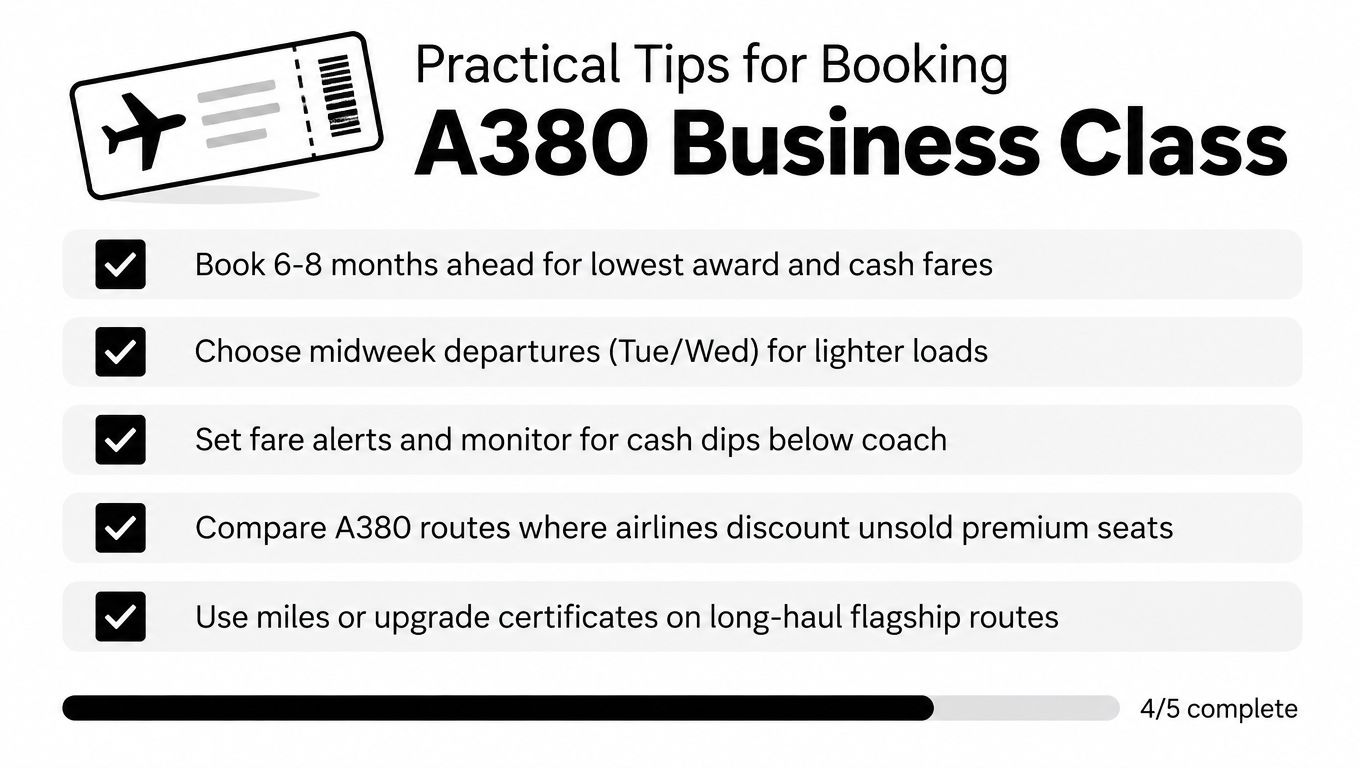
Travel dates can affect the result. SmarterTravel reports that Tuesday and Wednesday departures often price below Friday and Sunday departures on many long-haul markets. Treat that as a search angle, not a guarantee.
For a broader fare-timing toolkit, find affordable airfare to Japan offers a useful complementary look at route timing and fare behavior.
Who Should Actually Pay for Business Class
Corporate travel managers should care first, because premium cabins are a budget line, not a vibe. If staff are flying long-haul, arriving ready matters more than the seat photo, and that makes aircraft choice and fare timing part of policy, not indulgence. For weekly flyers and consultants, business class pays back fastest on overnight intercontinental routes where sleep directly affects the next workday.
Luxury leisure travelers have a different math. If the trip is the reward itself, business class can be worth it when the route is long, the product is a real bed, and the fare doesn't distort the whole vacation budget. SMB owners should be stricter, because thin travel budgets punish vanity buys fast.
Travel advisors need the clearest filter of all. Match the cabin to the itinerary, not the traveler's ego. If you're comparing options for clients, use aircraft-specific verification, fare timing, and route length as the main decision points.
The practical rule by traveler type
- Corporate managers: buy business class when arrival condition and scheduling certainty matter more than absolute fare minimums.
- Frequent flyers: pay only when the aircraft offers true lie-flat value on long sectors.
- Luxury leisure travelers: use it for long-haul trips where the cabin is part of the experience, not just transport.
- SMB owners: treat it as a strategic expense, not a default.
- Advisors: focus on route, seat map, and sale windows before recommending the cabin.
The blunt truth is simple. Business class is worth paying for when it solves a real trip problem, not when it just looks impressive on a booking screen.
Smart Ways to Book Premium Cabin Value
Business-class value starts with the aircraft, not the airline name. Check the seat map, confirm whether the seat is lie-flat or angled-flat, and look for direct aisle access if you need it. The cabin label is marketing; the seat map shows what you will get.
Set fare alerts for the exact route and aircraft type. Use the fare-timing principles covered earlier, then book when a sale window opens instead of checking manually. Compare SmarterTravel and Otto the Agent for additional fare-monitoring ideas.
Passport Premiere tracks international business- and first-class fare drops, which can help you spot a lower premium fare before paying the headline price. Travelers planning a Japan trip can also find affordable airfare to Japan.
Before paying, compare bed geometry, baggage, and lounge access with the route length and your need to arrive productive. A short daytime flight rarely justifies the premium. An overnight sector with a genuine bed may.
For more monitoring options, visit Passport Premiere and assess whether its fare alerts fit your next itinerary.